Disclosure: This article contains Amazon affiliate links. As an Amazon Associate, I earn from qualifying purchases.
Introduction
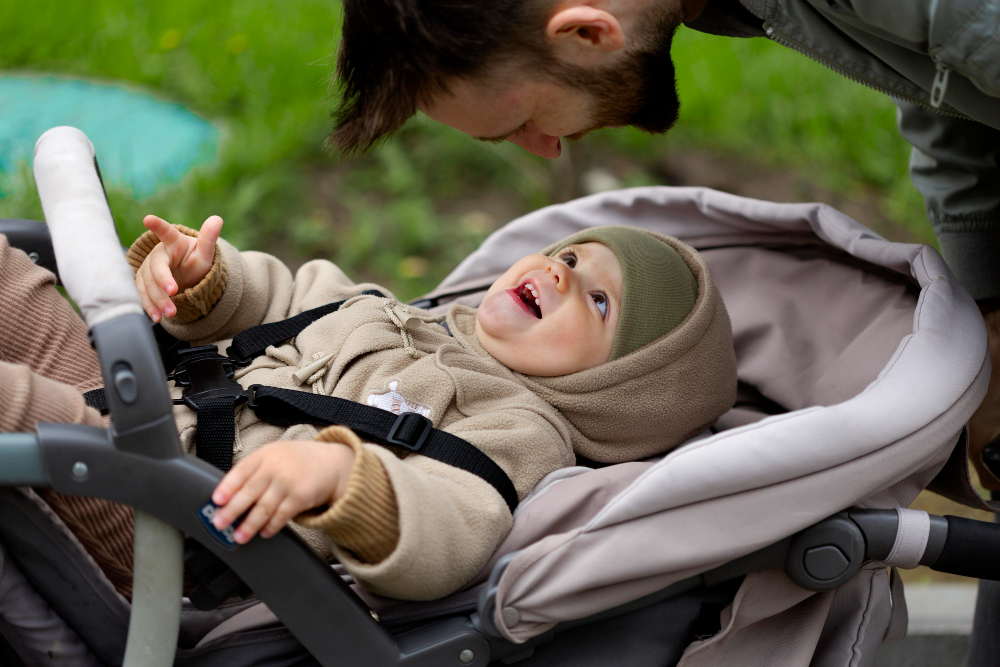
It’s 6 a.m., the baby just fell asleep in the car seat after a rough night, and you still need to get from the parking garage into the pediatrician’s office without waking her up. That’s the exact moment a travel system earns its keep — the car seat clicks straight out of the base and onto the stroller frame in one motion, no transfers, no crying, no juggling a diaper bag and a 15-pound seat at the same time.
A travel system pairs a stroller with a compatible infant car seat, sold either as a bundle or matched separately by the manufacturer. Most infant car seats are built for babies from birth up to roughly 30–35 pounds or about 30–32 inches, whichever limit hits first — after that, you’ll move up to a rear-facing convertible seat. The stroller frame itself usually lasts far longer, often to 50 pounds or age 3–4.
Below, we’ve lined up seven of the most-searched travel systems among U.S. parents in 2026, focused on fold speed, real stroller weight, and how each car seat actually performs on install day — not just on the box.
Table of Contents
How We Picked These Travel Systems
We didn’t just pull specs off Amazon listings. Each system on this list was checked against crash-test data where publicly available, real stroller weight (not the “folded weight” marketing number), fold speed with a baby on one hip, and how much daily-use fabric and plastic actually holds up — based on verified owner feedback and manufacturer safety documentation, not sponsored samples.
This is why you won’t see every trending stroller here: several popular 2026 releases didn’t make the cut because their car seat weight range was too short, or owner reports flagged durability issues within the first year.
Best 7 Top baby strollers with car seat travel systems for American parents
Every item has a fast summary, stroller weight, fold style, price range, advantages and disadvantages, and a link to the complete review article available on your website.
1. Chicco Bravo Trio Travel System — The Most Reliable Option for American Families
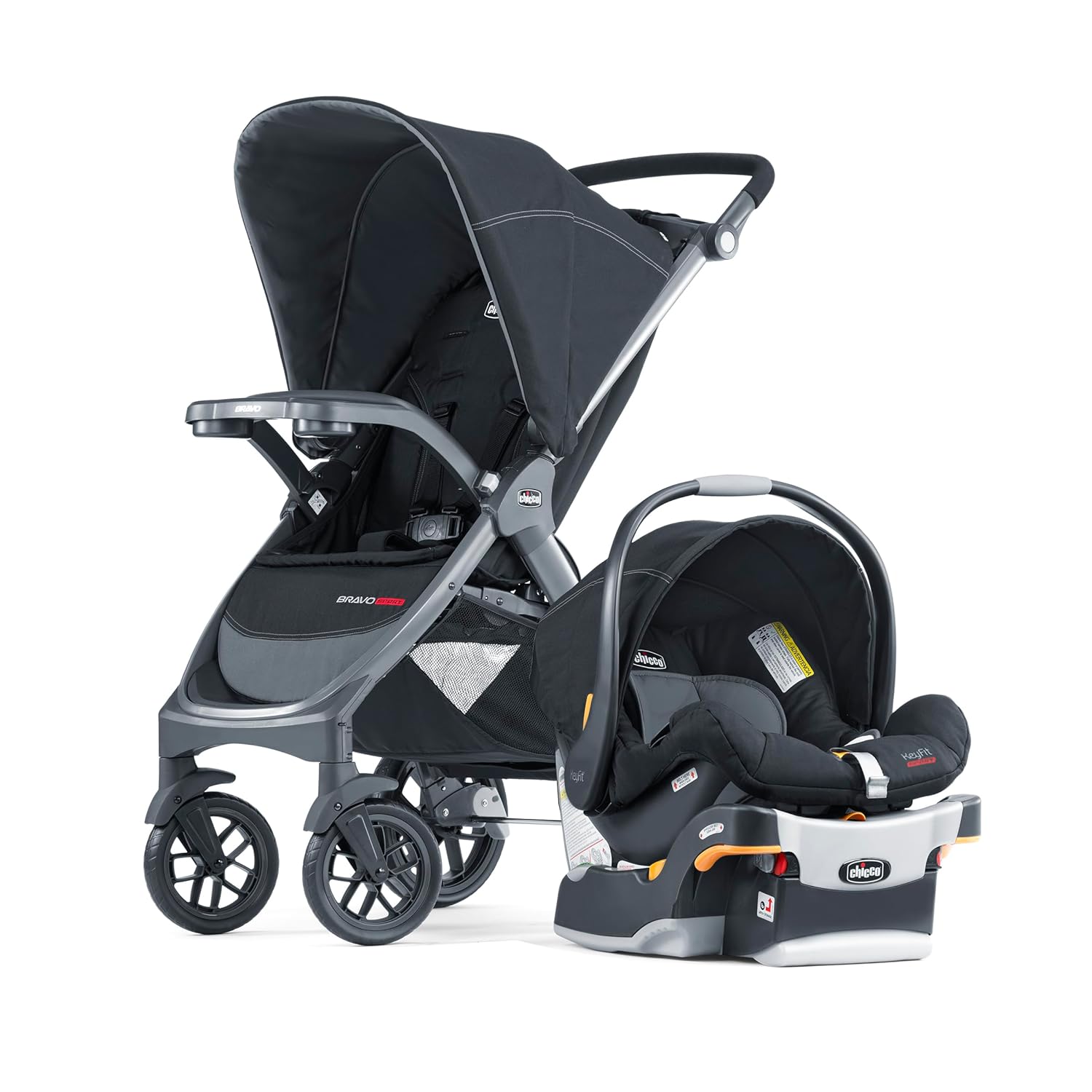
If you want a seat you can install once and stop second-guessing, this is the one most car-seat techs point new parents toward. The Chicco Bravo Trio pairs a full-size stroller with the KeyFit 30, a car seat that consistently scores well in independent crash testing and is one of the more common seats you’ll see recommended at hospital car-seat check events.
Stroller weight: 23 lbs
Fold type: One-hand compact standing fold
Car seat range: birth to about 30 lbs / 30″
Why it works:
- The KeyFit 30 has a genuinely simple, level-indicator-guided install — no wrestling with the seatbelt for twenty minutes in a parking lot.
- Ride quality holds up on cracked sidewalks and mall floors alike, thanks to the front suspension.
- The under-seat basket actually fits a diaper bag, not just a water bottle.
Where it falls short:
- 23 lbs plus the car seat gets heavy fast if you’re lifting the whole thing into a small trunk.
- Not built for gravel trails or unpaved parks — stick to pavement.
Read the whole Chicco Bravo Trio review
2. Graco Modes Pramette Travel System: Best Multi-Mode Choice for Developing Babies
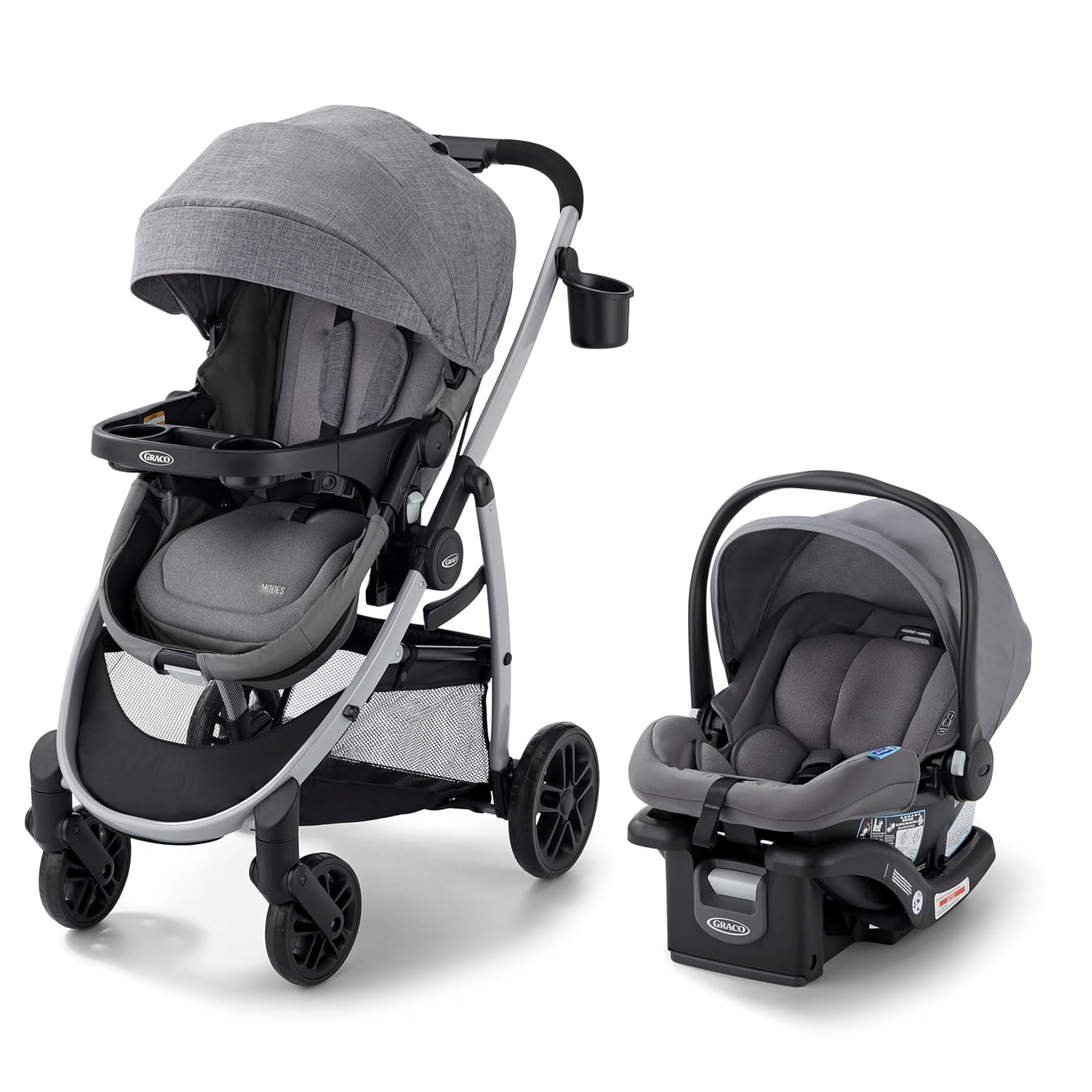
This is the one to grab if you don’t want to buy a separate bassinet stroller for the newborn stage and then a toddler stroller six months later. The Graco Modes Pramette shifts between pramette (flat, bassinet-style), parent-facing, and forward-facing toddler modes on the same frame, and it comes with the SnugRide 35 Lite, rated up to about 35 lbs.
Stroller weight: 22 lbs
Fold type: One-step self-standing fold
Car seat range: birth to about 35 lbs / 32″
Why it works:
- Three real seating modes mean you’re not shopping again at the 6-month mark.
- One of the more budget-friendly full-size systems on this list.
- Light enough to load and unload solo, even with a baby on your hip.
Where it falls short:
- Standard wheels struggle on gravel or grass — this is a sidewalk-and-mall stroller.
- The car seat padding is basic compared to pricier options; a seat liner helps in colder months.
Full Review: Graco Modes Pramette Review
3. UPPAbaby Vista V2 + Mesa Car Seat: performance and luxury for contemporary American lifestyle
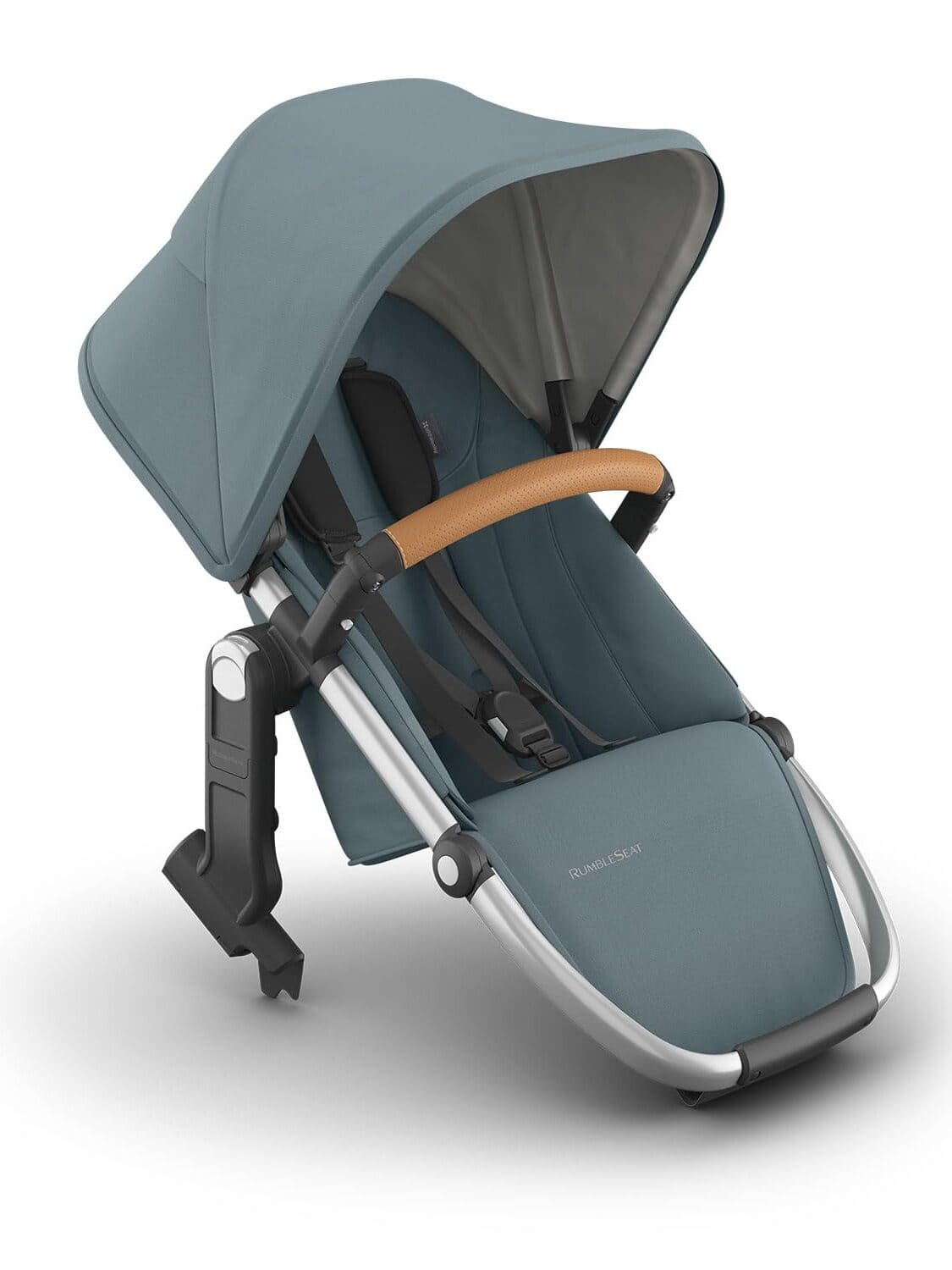
This is the system parents buy once and keep for a second baby. The UPPAbaby Vista V2 converts to a double stroller with an add-on RumbleSeat, and the Mesa infant seat snaps onto the frame with zero adapters needed.
Stroller weight: 27 lbs
Fold type: Two-step compact fold
Car seat range: birth to about 35 lbs / 32
Why it works:
- The ride feels closer to a jogging stroller than a standard travel system — big wheels, real suspension.
- Expands for siblings 18 months or more apart without buying a new frame.
- Premium fabric and stitching that still looks good after two years of daily use.
Where it falls short:
- This is the priciest system on the list by a wide margin.
- The frame is bulky for narrow city apartments or small SUV trunks.
Read the complete review: UPPAbaby Vista V2 Review
4. Best Affordable Travel System in the US: Evenflo Pivot Modular Travel System
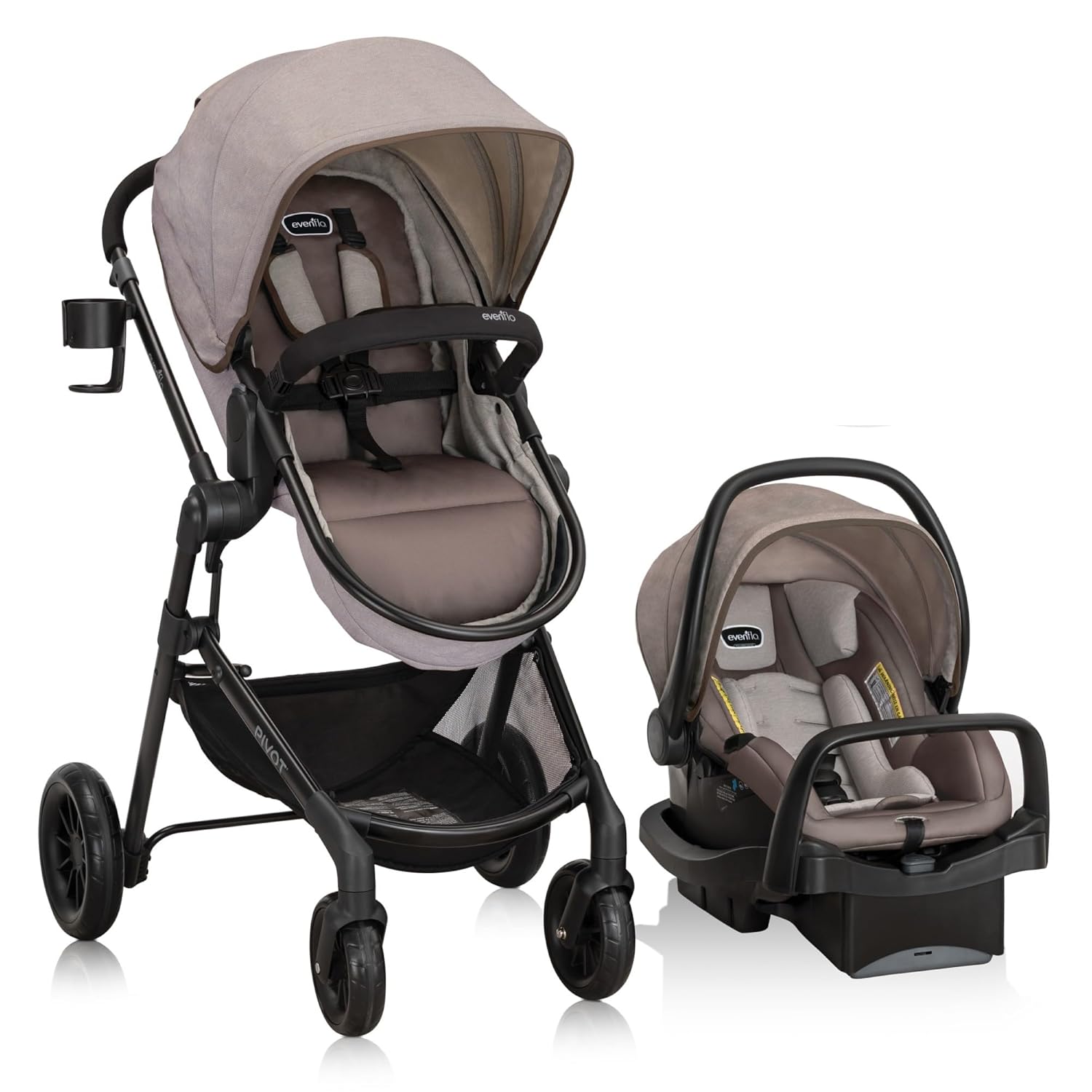
If the budget is tight and you still want a real anti-rebound bar on the car seat, this is the practical pick. The Evenflo Pivot Modular pairs with the SafeMax seat, which is rollover and side-impact tested and includes an anti-rebound bar — a feature that’s often reserved for pricier seats.
Stroller weight: 20 lbs
Fold type: Manual pivot fold
Car seat range: birth to about 35 lbs / 32″
Why it works:
- The lowest price point in this roundup without dropping the anti-rebound bar.
- The seat reverses between parent-facing and forward-facing as your toddler grows.
- Easy for one adult to fold and load without help.
Where it falls short:
- Fabric and plastic quality feel a step below Chicco or UPPAbaby after heavy daily use.
- Wheels are basic, better suited to smooth pavement than parks.
Read the complete review: Evenflo Pivot Modular Review
5. Best for daily errands in the United States: Baby Trend EZ Ride 35 Travel System
Built for the Target-and-preschool-pickup routine rather than long hikes. The Baby Trend EZ Ride 35 comes with an EZ-Lift car seat rated to about 35 lbs, so you get more months out of the infant seat than some competitors on this list.
Stroller weight: 21 lbs
Fold type: One-hand fold
Car seat range: birth to about 35 lbs / 32″
Why it works:
- Rides smoothly on flat sidewalks, tile floors, and parking lots.
- Deep parent tray with two real cup holders — not the shallow, tips-over kind.
- Genuinely one of the cheapest full travel systems worth buying new.
Where it falls short:
- The stroller frame doesn’t hold up as well once your toddler hits the heavier end of the range.
- Materials are basic — fine for daily errands, not built for years of rough use.
Read the complete review at Baby Trend EZ Ride 35 Review
6. Best for safety-conscious American parents: Britax B-Lively & B-Safe Gen2 Travel System
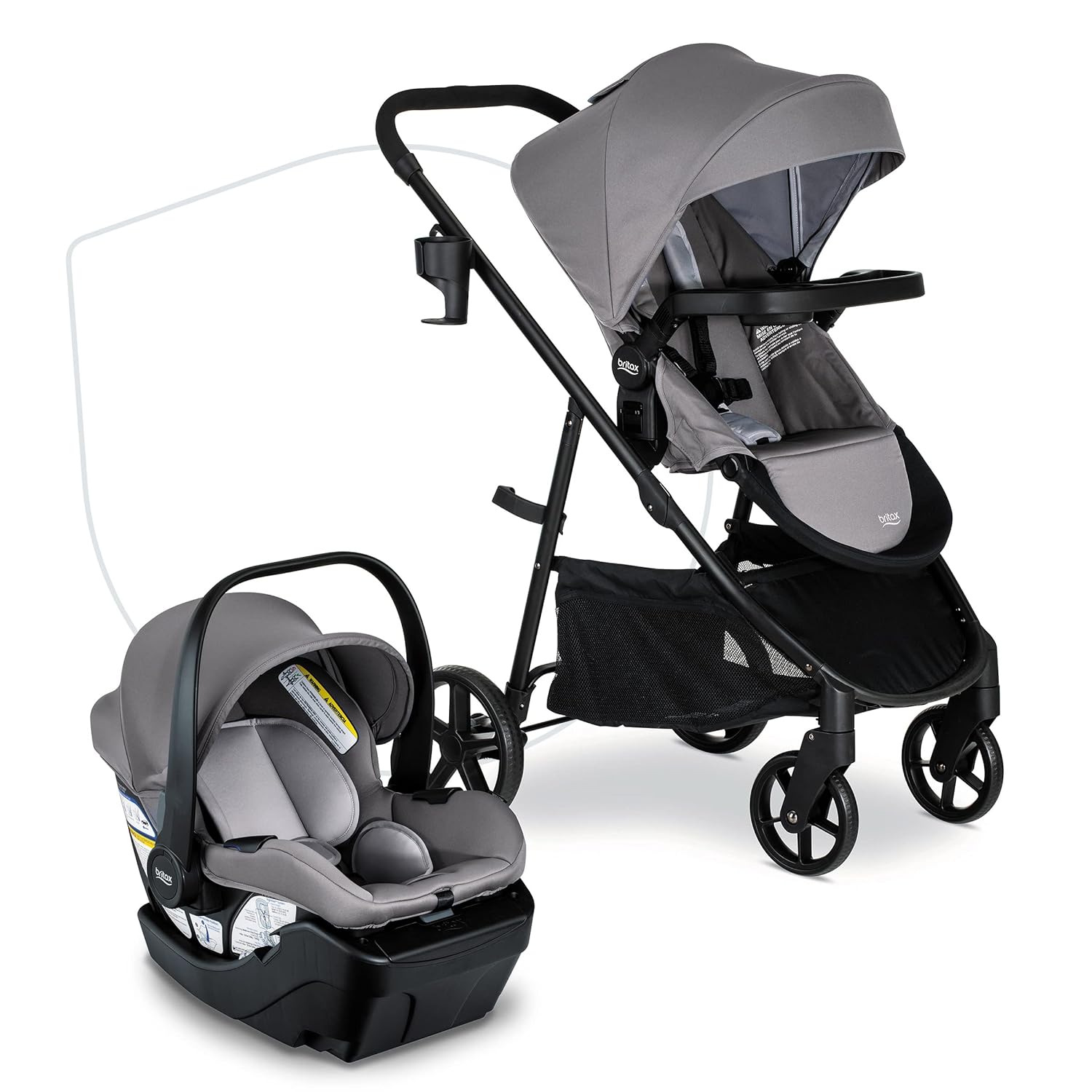
Britax has built its U.S. reputation on crash-test performance, and the B-Lively & B-Safe Gen2 combo leans into that: a steel-reinforced car seat base, side-impact cushioning, and a stroller frame that’s genuinely quick to fold with one hand while holding a baby in the other arm.
Stroller weight: 20 lbs
Fold type: One-hand rapid-fold
Car seat range: birth to about 35 lbs / 32″
Why it works:
- Consistently ranks among the higher-scoring seats in independent crash testing.
- Light and fast to fold — useful when you’re chasing a toddler and holding an infant at the same time.
- A sun shade canopy covers more of the seat than most competitors, good for states like Arizona or Florida where midday sun is brutal on a napping newborn.
Where it falls short:
- The storage basket is smaller and harder to reach with the seat attached.
- Recline range is narrower, so very young infants may need a head support insert.
Read the complete review: Review of Britax B-Lively
7. Maxi-Cosi Zelia² Best Comfort and Stylish Design for American Parents

The Maxi-Cosi Zelia² is the one parents pick when the stroller has to look as good as it functions — think city sidewalks and coffee runs, not off-road trails. The Mico 30 infant seat is one of the lighter carriers in this roundup, which matters at month four when your arm is tired.
Stroller weight: 21 lbs
Fold type: One-step compact fold
Car seat range: birth to about 30 lbs / 30″
Why it works:
- Padding is noticeably softer than the budget picks on this list — good for sensitive newborn skin.
- Sleek, modern styling that doesn’t scream “baby gear.”
- The Mico 30 is easy to carry one-handed into a store or restaurant.
Where it falls short:
- Standard wheels aren’t meant for gravel, grass, or trail use.
- Storage basket runs smaller than the Chicco or Graco systems above.
Read the whole review: Maxi-Cosi Zelia².
What About All-in-One Car Seat Stroller Combos?
Doona Infant Car Seat Stroller Combo
Every system above still needs two pieces clicked together. There’s a smaller, pricier category that skips that step entirely — the seat itself grows wheels.
The Doona is the one most parents have heard of: the carrier folds its own wheelbase in and out in one motion, no separate stroller frame to buy or store. The Evenflo Shyft DualRide does the same trick but lets you detach the wheels from the carrier entirely, which matters if you’re hauling a sleeping baby up an apartment stairwell without the extra bulk.
Neither is a replacement for a full-size stroller once your toddler outgrows the infant seat around 30–35 lbs, and both cost more upfront than a standard travel system. But for rideshare-heavy city living or frequent flying, they solve a real problem the systems above don’t. If you’re torn between the two, our side-by-side breaks down Evenflo vs Doona in detail.
Comparison Table: Quick USA-Focused Overview
| Model | Stroller Weight | Car Seat Weight Range | Fold Type | Best Suited For |
|---|---|---|---|---|
| Chicco Bravo Trio | 23 lbs | Birth–30 lbs | One-hand | Reliability and safety |
| Graco Modes Pramette | 22 lbs | Birth–35 lbs | Self-standing | Multi-mode value |
| UPPAbaby Vista V2 | 27 lbs | Birth–22 lbs | Compact two-step | Luxury & growing families |
| Evenflo Pivot Modular | 20 lbs | Birth–35 lbs | Pivot fold | Budget pick |
| Baby Trend EZ Ride 35 | 21 lbs | Birth–35 lbs | One-hand | Daily errands |
| Britax B-Lively | 20 lbs | Birth–35 lbs | One-hand rapid-fold | Safety-focused parents |
| Maxi-Cosi Zelia² | 21 lbs | Birth–30 lbs | Compact | Comfort & style |
What These Travel Systems Actually Cost in 2026
Budget tier ($150–$250): Evenflo Pivot Modular, Baby Trend EZ Ride 35 — solid safety basics, fewer premium extras.
Mid tier ($300–$450): Chicco Bravo Trio, Graco Modes Pramette, Britax B-Lively & B-Safe Gen2 — the sweet spot for most US families.
Premium tier ($600–$1,000+): UPPAbaby Vista V2 + Mesa, Maxi-Cosi Zelia² — pay for build quality, expandability, and design, not extra safety.
Prices shift often around Amazon Prime Day and Black Friday — worth checking current pricing before you commit, especially on the premium tier.
How to Choose the Right Travel System for Your Family
1. Don’t skip the safety basics
Before you look at colors or fabric, check for a 5-point harness, energy-absorbing foam (EPS or EPP), and — where available — an anti-rebound bar. Every seat sold in the U.S. has to meet FMVSS 213, the federal crash standard, but independent testing from groups like Consumer Reports still shows real differences in how seats perform beyond that minimum bar.
2. Weigh the stroller, not just the car seat
A 27-lb stroller with a car seat clipped on can feel like carrying a small child up a flight of stairs. If you’re regularly dealing with apartment stairs, rideshares, or public transit, a lighter frame with a one-hand fold saves you real frustration.
3. Think past year one
Infant car seats top out around 30–35 lbs or 30–32 inches for most models, whichever limit hits first — often between 12 and 18 months. Look at what comes next: a rear-facing convertible seat is the standard move once your baby outgrows the infant seat.
4. Storage basket size
For actual grocery runs and diaper bag duty, look for a basket that stays accessible even with the car seat attached — a few models on this list shrink basket access once the seat clicks in. If the basket still feels too small once you’re loading a diaper bag, a snap-on stroller organizer solves that without buying a bigger stroller.
5. Match the wheels to where you’ll actually walk
Smooth sidewalks and mall floors are fine with standard wheels. Parks, gravel, or unpaved trails need bigger wheels and real suspension — most budget systems aren’t built for that terrain.
6. Plan for weather, not just terrain
A newborn in a travel system is stuck wherever you push them — there’s no ducking under an awning fast enough when it starts pouring. A rain cover that fits your specific model is worth owning before you need it, not after the first surprise downpour.
Check for Recalls Before You Buy — Even New
Recalls happen more often than most parents realize, and they’re not limited to older or secondhand gear. Before you buy any travel system, run the model through the NHTSA recall lookup, and if you’re eyeing an Evenflo or Safety 1st seat specifically, it’s worth a quick check first — we track these as they’re issued:
If you’re buying secondhand or a hand-me-down system, this step matters even more — an expired or recalled car seat is one of the most common mistakes new parents make without realizing it.
That word ‘expired’ isn’t just about recalls, either. Every infant car seat has a hard expiration date stamped or molded into the plastic shell — usually 6 to 7 years from the manufacture date, not the purchase date. Heat, sun exposure, and years of trunk storage break down the plastic faster than most parents expect. Before you accept a hand-me-down or buy secondhand, check that date first — a car seat that looks fine can still be past its safe-use window
Frequently Asked Questions
1. How long can my baby use the infant car seat that comes with the travel system?
Most infant car seats last from birth until your baby hits about 30–35 lbs or 30–32 inches, whichever comes first — usually somewhere between 12 and 18 months depending on how fast your baby grows. After that, you’ll move to a rear-facing convertible seat.
2. How long does the stroller itself last?
The stroller frame typically outlasts the car seat by years — many of the models above are rated up to 50 lbs, which usually covers your child until age 3 or 4.
3. Do I need to buy a separate base for a second car?
If you split time between two vehicles, yes — an extra base (sold separately for most models above) lets you leave the seat clicked into the stroller while still having a car ready to go.
4. Is a heavier travel system always safer?
Not necessarily. Weight mostly affects how the stroller rides and folds, not crash protection — that comes down to the harness, foam, and how the seat performed in independent testing, not how much the whole unit weighs.
5. My stroller doesn’t come bundled with a matching car seat — can I still build a travel system?
Yes. Several lightweight strollers, like the UPPAbaby MINU V3 or the BABYZEN YOYO, accept separately sold car seat adapters instead of shipping with a seat already matched. It costs a bit more upfront than an all-in-one bundle, but it means you’re not locked into one brand’s infant seat if you’d rather pick the seat first and the stroller second.
6. Should I bring my full travel system if I’m flying with the baby?
Usually not the whole thing. Full-size travel systems are heavy and awkward at airport security, and gate-checking a bulky stroller means it gets tossed around with luggage. Most frequent flyers either check the stroller frame and gate-check just the car seat, or switch to a compact travel stroller with adapters for the flight itself and use the full system only once they’re back home. If flying is a regular thing for your family, it’s worth owning both.
Conclusion
The right pick usually comes down to your actual daily routine, not the spec sheet. If you’re mostly on flat sidewalks and tight parking lots, prioritize a light, one-hand fold — the Bravo Trio or B-Lively cover that well. If you’re planning for a second baby, the Vista V2 pays for itself over time. And if the budget is the deciding factor, the Pivot Modular still gets you real safety features without the premium price tag.
Whichever system you land on, buying from Amazon, Target, or Walmart keeps you covered with standard manufacturer warranties and easy returns if the fit isn’t right once it’s in your car.
Saim Mughal is the founder of Care for Cuties, testing and comparing baby gear firsthand so parents get advice they can trust, not recycled claims.
16 Responses