Newborn Weight Loss Calculator
Evidence-based weight tracking for the first days & weeks of life
Birth details
Birth details
Current measurement
Birth details
Weight measurements
This post contains affiliate links. If you purchase through our links, we may earn a small commission at no extra cost to you.
Table of Contents
Your baby was weighed at the hospital — and the number went down. Now you’re home, staring at the scale, wondering if something is wrong. That number drop is normal. But knowing how much is too much makes all the difference.
This free tool handles the math instantly. Enter your baby’s birth weight and current weight, and get a percentage result with clear, CDC-based guidance on what it means.
Newborn Weight Loss Calculator
Unit Pounds & Ounces Grams Kilograms Birth Weight (lbs)Birth Weight (oz)Birth Weight (grams)Birth Weight (kg)Current Weight (lbs)Current Weight (oz)Current Weight (grams)Current Weight (kg)Calculate Weight Loss %
This tool is for informational purposes only. Always consult your pediatrician for medical guidance.
What Is Normal Weight Loss in Newborns?
Almost every newborn loses some weight in the first few days after birth. This happens because babies are born with extra fluid, and their bodies shed it through urine, stool, and sweat.
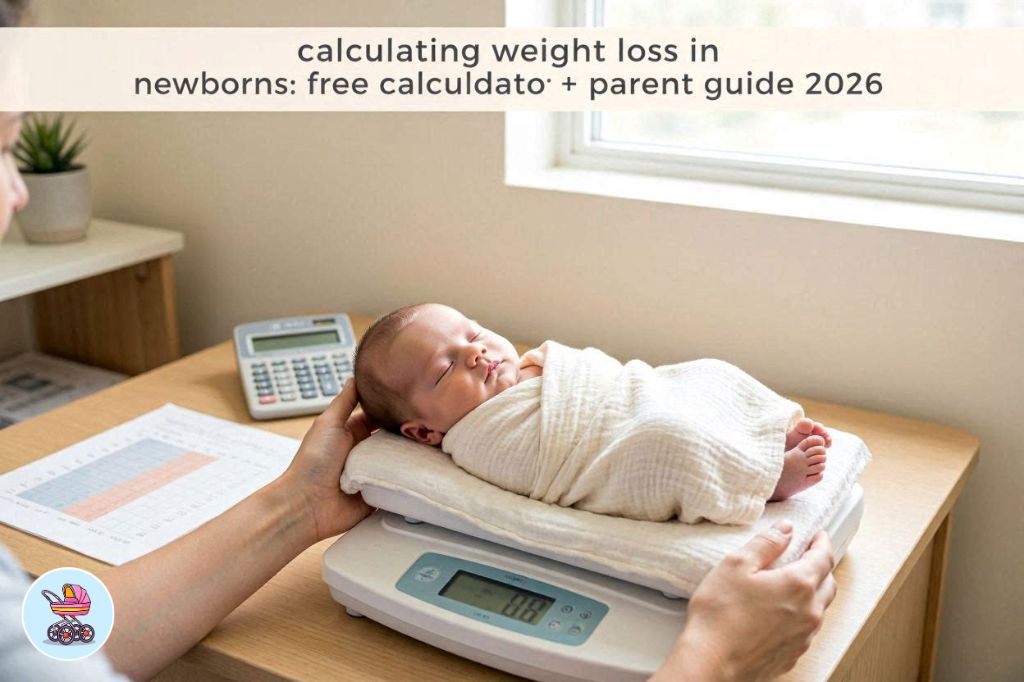
Pediatricians track this using a simple percentage. Calculating weight loss in newborns tells you whether the drop is within a safe range or needs medical attention.
📋 Quick Reference Most healthy newborns lose 5–10% of their birth weight in the first 3–5 days. But the number pediatricians actually watch for is 7%. Cross that line, and your baby’s feeding gets a closer look — not because something’s wrong, but because it’s the point where a lactation check catches problems early instead of late. Anything under 7% with good feeding and wet diapers, don’t panic. The real deadline either way: back to birth weight by day 10–14.
Formula-Fed vs Breastfed: Different Normal Ranges
Here’s something many articles skip: breastfed and formula-fed babies have different normal loss thresholds. Formula-fed babies tend to lose less because their intake is measurable from day one.
Breastfed babies may lose a bit more while milk supply establishes — but this is still normal as long as the trend reverses by day 4–5.
Why Delivery Type Changes What’s “Normal”
Here’s the input most weight-loss calculators ask for and then never explain: how your baby was born.
C-section babies typically lose more weight, faster, than vaginally delivered babies — and it’s not about anything you did wrong. Vaginal birth squeezes a lot of the extra fluid out of a baby on the way through. A cesarean baby skips that squeeze, so there’s more fluid to shed afterward, and it shows up on the scale.
The gap is bigger than most parents expect. Research on breastfed newborns found that by 48 hours after birth, roughly 5% of vaginally born babies had lost 10% or more of their birth weight — compared to over 10% of cesarean-born babies. By 72 hours, that cesarean number climbs past 25%.
What this means for you: if your baby was born by C-section and is sitting at 8–9% loss on day 3, that’s not automatically the red flag it would be for a vaginally delivered baby at the same number. Your pediatrician will weigh delivery type into the same decision. Mention it when you call.
Why the Hour of Weighing Matters More Than the Day
A 7% loss at 12 hours old is a completely different situation than a 7% loss at 4 days old — one is barely started, the other might be near the bottom of the curve.
Most home tracking advice talks in “days.” Hospitals and lactation consultants talk in hours, especially in the first 48. That’s why this calculator asks for age in hours or days at measurement — the same percentage means something different depending on how much time has passed since birth.
Rule of thumb: weight loss is expected to keep climbing until somewhere around day 3–4, then flatten, then reverse. If the percentage is going up after day 5, the hour or day it happened matters less than the fact that it’s still climbing at all — call your pediatrician regardless of the exact number.
Normal Weight Loss by Feeding Type
| Day After Birth | Breastfed (Normal Range) | Formula-Fed (Normal Range) | Status |
|---|---|---|---|
| Day 1–3 | Up to 7% | Up to 5% | Normal |
| Day 4–5 | Up to 10% | Up to 7% | Watch |
| Day 6–9 | Losing should stop | Gaining should start | Monitor |
| Day 10–14 | Back to birth weight | Back to birth weight | Alert if not |
How to Calculate Weight Loss in Newborns (The Formula)
The math is simple. Doctors, nurses, and lactation consultants all use the same formula:
% Weight Loss = ((Birth Weight − Current Weight) ÷ Birth Weight) × 100
You enter the numbers above and the calculator does this instantly. But understanding the formula helps you spot-check results and talk to your doctor confidently.
Step-by-Step Example in Pounds and Grams
Example 1 (pounds/ounces): Baby born at 7 lbs 8 oz (120 oz total). Current weight: 7 lbs 0 oz (112 oz). Loss = 8 oz. Calculation: (8 ÷ 120) × 100 = 6.7% loss — normal range.
Example 2 (grams): Birth weight 3,400g. Current weight 3,060g. Loss = 340g. Calculation: (340 ÷ 3400) × 100 = 10% loss — borderline, needs doctor evaluation.
Real Parent Scenario: “Emma’s daughter was born at 8 lbs 2 oz. By day 3, she weighed 7 lbs 7 oz. She plugged the numbers in, got 8.2%, and called her pediatrician — who confirmed it was borderline but manageable with more frequent feeds. By day 10, her daughter was back to birth weight.”
The Mistake That Makes Weight Loss Look Worse (or Better) Than It Is
Always calculate against birth weight — never against yesterday’s weigh-in.
Say your baby was 3,400g at birth, 3,200g yesterday, and 3,150g today. It’s tempting to think “only lost 50g since yesterday, that’s fine.” But the number that matters is still measured from birth: (3,400 − 3,150) ÷ 3,400 = 7.4%. Comparing to the previous day hides how far your baby actually is from where they started, and it’s the single most common way parents (and even some tired night-shift nurses) miscalculate this.
Day-by-Day Weight Recovery Timeline
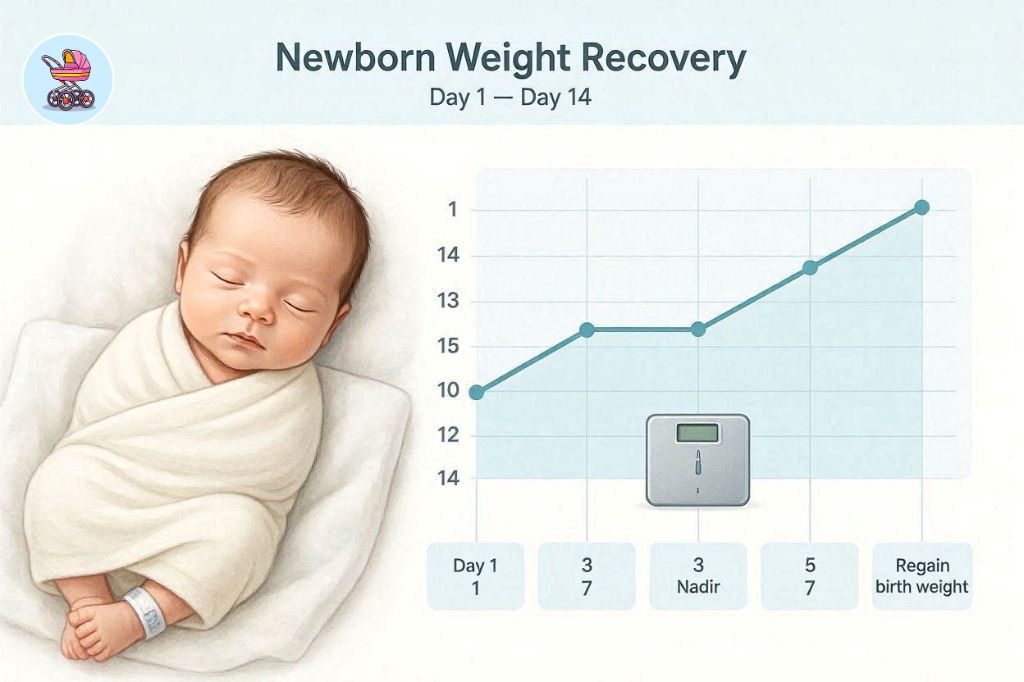
Knowing the percentage is only part of the picture. The timing of the loss and recovery matters just as much.
Most babies hit their lowest weight around days 3–4. After that, the trend should reverse. If your baby is still losing weight on day 6 or 7, that is a red flag regardless of the exact percentage.
Day-by-Day Milestones: What to Expect
| Day | Expected Weight Status | Flag If… |
|---|---|---|
| Day 1–2 | Slight loss begins | Loss already over 7% |
| Day 3–4 | Lowest point (normal) | Loss over 10% |
| Day 5–6 | Loss stops, gaining starts | Still losing |
| Day 7–9 | Steady gain (0.5–1 oz/day) | No gain yet |
| Day 10–14 | Back to birth weight | Still below birth weight |
When Should Baby Regain Birth Weight?
The American Academy of Pediatrics (AAP) says most babies should regain their birth weight by 10–14 days of age. If your baby has not reached birth weight by day 14, your pediatrician needs to evaluate feeding and rule out any underlying issue.
Premature babies and babies with certain health conditions may take longer — your doctor will give you specific targets based on your baby’s situation. 👁️
Try Our Baby Eye Color Calculator Curious what color eyes your baby might have? This fun tool uses genetics to give you a prediction.
Warning Signs: When to Call Your Pediatrician
A percentage number alone does not tell the full story. A baby losing 9% but feeding well and producing wet diapers is very different from a baby losing 8% who seems lethargic and is not wetting diapers.
Watch for these signs alongside the weight number:
- Fewer than 6 wet diapers per day by day 4–5
- Dark yellow or orange-tinted urine (a sign of dehydration)
- Dry mouth or no tears when crying
- Baby is difficult to wake for feedings
- Yellowing skin (jaundice) that seems to be spreading
- No bowel movement for more than 24 hours in the first week
ER vs “Wait and Watch” — The Real Distinction
Most weight loss situations do not require the emergency room. But some do. Here is the clearest breakdown you will find:
When to Call vs When to Go to the ER
| Situation | Action |
|---|---|
| Loss 7–10%, baby alert and feeding | Call pediatrician, schedule same-day visit |
| Loss over 10% | Call pediatrician immediately — same day |
| Baby won’t wake for feeds, very lethargic | Go to ER or call 911 |
| Sunken fontanelle (soft spot), no tears, very dry mouth | Go to ER — signs of severe dehydration |
| Still below birth weight at 2 weeks | Pediatrician appointment required |
🚨 Important If your baby looks unwell regardless of the percentage — trust your instincts and call your doctor. Numbers are a guide, not the only measure of health.
How to Track Your Newborn’s Weight at Home
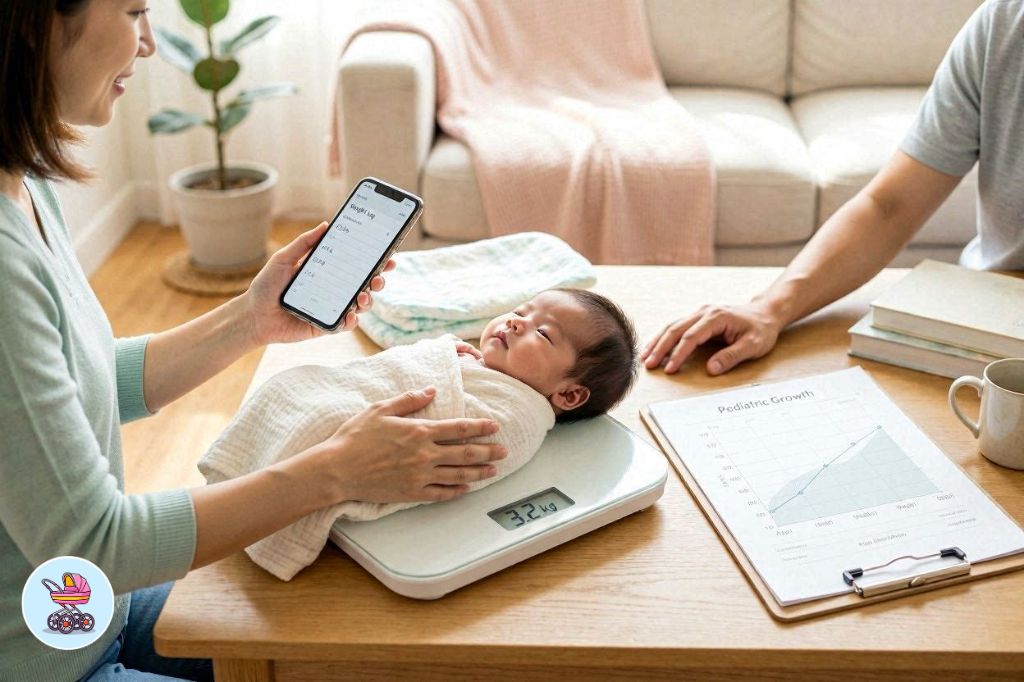
Most pediatricians recommend an office visit at 2–3 days after hospital discharge, then again at 2 weeks. Between those visits, some parents weigh at home for reassurance.
If you weigh at home, use a digital baby scale — not a bathroom adult scale. Adult scales are not accurate enough for ounce-level changes in a newborn.
- Weigh at the same time of day each time (ideally before a feeding)
- Remove diaper and clothing for accurate results
- Log each reading with the date and time
- Bring your log to every pediatrician visit
Real Parent Tip: “I kept a simple notes app entry every morning before the 7 AM feeding. When our son’s pediatrician asked how his weight trend was going, I had exact numbers for every day. She said it was the most useful thing a new parent had shown her in a while.” — Jessica, mom of 2
Baby Hair Color Calculator Another fun tool for expecting parents — predict your baby’s hair color based on mom and dad’s genetics.
Recommended Products
Hatch Baby Grow Smart Changing Pad & Scale

This is the gold standard for home newborn weight tracking. It doubles as a changing pad and logs weight automatically to an app, so you always have a timestamped record for your pediatrician. Parents love that it removes the guesswork entirely.
⭐ Best For: Parents who want precise daily tracking without a separate scale
| Product type: | Smart changing pad + scale |
| Weight capacity: | Up to 44 lbs |
| Available on Amazon: | Yes |
- ✅ App logs every weight automatically
- ✅ Doubles as changing pad — saves space
- ✅ Shares data directly with pediatrician
- ❌ Higher price point than basic scales
- ❌ Requires smartphone to view data
Greater Goods Digital Baby Scale
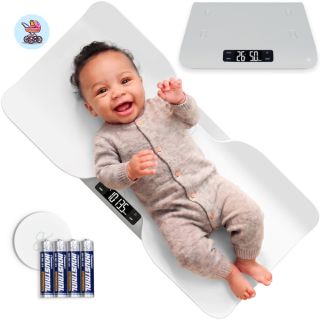
A no-fuss digital scale that gives accurate readings in pounds/ounces and grams. It is a favorite among US parents for its simple display and affordable price. Works great for daily weigh-ins during the first two weeks.
⭐ Best For: Budget-friendly daily home monitoring
| Product type: | Digital baby scale |
| Capacity: | Up to 44 lbs |
| Available on Amazon: | Yes |
- ✅ Displays lbs/oz and grams
- ✅ Holds reading while you dress baby
- ✅ Very affordable
- ❌ No app or data logging
- ❌ Manual record-keeping required
Baby Feeding & Milestone Log Journal

A simple paper log that tracks feeds, wet diapers, sleep, and weight in one place. It gives you exactly what your pediatrician wants to see at every visit. Works for both breastfeeding and formula-feeding families.
⭐ Best For: Parents who want a simple, screen-free tracking option
| Product type: | Baby tracking journal |
| Format: | Spiral-bound, daily pages |
| Available on Amazon: | Yes |
- ✅ Tracks feeds, diapers, weight together
- ✅ No phone or app needed
- ✅ Very affordable
- ❌ Manual entry only
- ❌ Can’t share data digitally
Where to Buy Baby Scales — Best Price Today
Amazon USA offers the widest selection of baby scales with fast Prime delivery. Always purchase from the official Amazon listing to ensure return protection and warranty coverage.
Always purchase from authorized retailers only.
Frequently Asked Questions.
How do I calculate my newborn’s weight loss percentage?
Subtract the current weight from the birth weight. Divide that number by the birth weight. Then multiply by 100. For example: birth weight 3,500g, current weight 3,220g — loss is 280g. Calculation: (280 ÷ 3500) × 100 = 8%. Use the calculator above for instant results.
How much weight loss is normal for a newborn in the first week?
A loss of 5–7% is common and expected, and pediatricians use 7% as the number where they start paying closer attention — not an emergency, just a checkpoint. Loss above 7% up to 10% can still be normal, especially for breastfed babies whose milk supply is still coming in, but it usually means a feeding check is worth scheduling. Either way, the pattern to watch is: loss should stop and reverse by day 4–5. That’s different from being back at birth weight, which typically takes until day 10–14 — don’t confuse “starting to gain again” with “fully recovered.”
Is 10% weight loss dangerous for a newborn?
Not necessarily dangerous on its own — but it does require a same-day call to your pediatrician. A 10% loss combined with poor feeding, dehydration signs, or lethargy needs immediate evaluation.
Do breastfed babies lose more weight than formula-fed babies?
Yes. Formula-fed babies typically lose around 3–4% because intake is measurable from the first feed. Breastfed babies typically lose more — often 6–7% — while milk supply is still coming in. The AAP flags 7% as the point where a breastfed baby should get a lactation evaluation, not because something’s necessarily wrong, but to catch feeding problems before they become dehydration problems. Loss up to 10% can still turn out fine, but it’s the range where “wait and see” stops being the default answer.
When should a newborn regain birth weight?
Most newborns regain their birth weight by 10–14 days of age. According to the AAP, if your baby has not reached birth weight by 2 weeks, your pediatrician needs to assess the situation.
What are signs of dehydration in a newborn?
Key signs include: fewer than 6 wet diapers per day after day 4, dark yellow urine, dry mouth, no tears when crying, sunken soft spot (fontanelle), or unusual sleepiness. Any of these alongside high weight loss = call your doctor immediately.
Can I weigh my baby accurately at home?
Yes, with a proper digital baby scale — not an adult bathroom scale. Adult scales are not precise enough for newborn weight changes. Weigh your baby at the same time each day, without clothes or a diaper, for the most consistent results.
What should I tell my doctor about my baby’s weight loss?
Tell them: birth weight, current weight, the percentage (use our calculator), how many feedings per day, how many wet and dirty diapers per day, and whether your baby seems alert or lethargic. Bringing a daily weight log makes the conversation much more useful.
Does a C-section affect how much weight my baby loses?
Yes, more than most parents expect. Babies born vaginally get a lot of extra fluid squeezed out during delivery; C-section babies skip that, so they often lose more weight, faster. In one large study, by 48 hours after birth about 5% of vaginally delivered babies had lost 10% or more of their birth weight — compared to over 10% of babies delivered by cesarean. If your baby was born by C-section, factor that in before assuming a higher percentage means a problem, and mention the delivery type when you call your pediatrician.
The Bottom Line on Calculating Weight Loss in Newborns
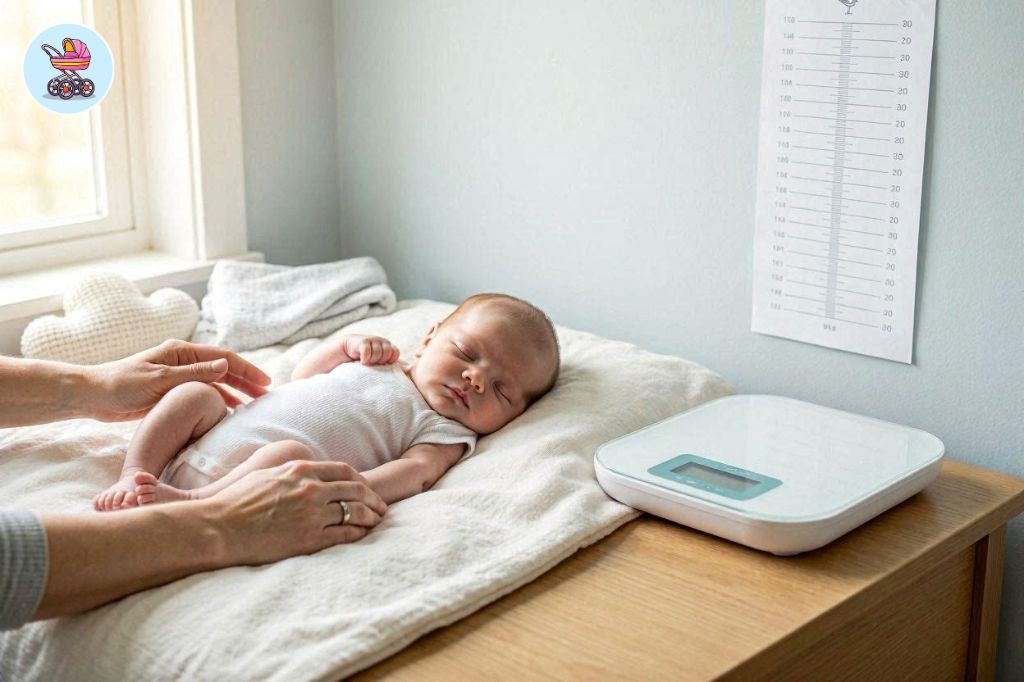
Weight loss after birth is normal. It happens to almost every baby. The goal is not to prevent it — it is to track it, understand what the numbers mean, and know exactly when to call your doctor.
Use this calculator at every weigh-in during the first two weeks. If the percentage stays under 7%, feed on demand and relax. If it hits 10% or above, call your pediatrician that same day. And always trust your instincts — numbers are a tool, not a replacement for knowing your baby.
While you are preparing for baby, check out our guide to the Best Baby Shower Themes 2025 — because celebrating this new chapter matters too.
Sources: American Academy of Pediatrics — newborn weight loss and first office visit guidance | HealthyChildren.org (AAP) — newborn growth in the first month | AAP Pediatrics journal — weight loss nomograms by delivery mode | Fed Is Best Foundation — newborn weight loss calculator and research
Medical Disclaimer: This calculator and article are for informational purposes only. They do not replace professional medical advice. Always consult your licensed pediatrician for guidance specific to your baby’s health.