This post contains affiliate links. If you purchase through our links, we may earn a small commission at no extra cost to you.
Last Updated: May 2026
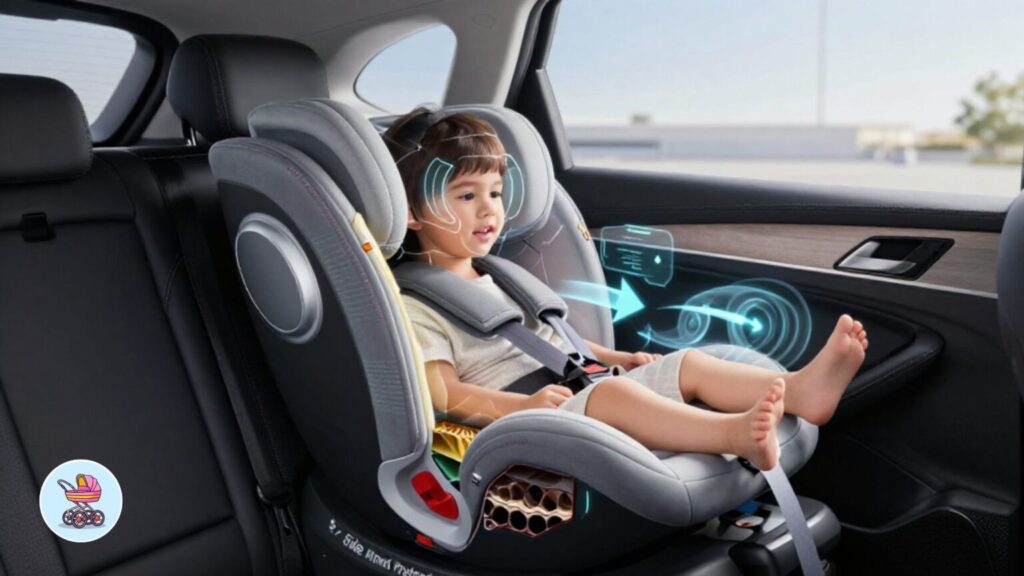
You’re comparing car seats online and you keep seeing “SIP” everywhere. But no one actually explains what it means in plain English.
That gap matters. Side-impact crashes are the second most common cause of serious injuries to child passengers — and the wrong seat leaves your child exposed. In this guide, I’ll explain exactly what SIP on a car seat means, how it works, and what the brand-new 2026 federal standard means for US parents shopping right now.
Table of Contents
What Does SIP on a Car Seat Mean?
SIP stands for Side Impact Protection. It’s a set of design features built into a car seat specifically to protect your child during a side-impact collision.
Side crashes are uniquely dangerous for children. Unlike a front-end crash, there’s almost no crumple zone between your child and the point of impact. Children also sit higher than adults, which means they’re less protected by the vehicle’s door frame and chassis.
Think of SIP as a built-in shield around your child’s head and torso — one that absorbs and redirects crash energy before it reaches them.
If you’re shopping for your first seat, this guide pairs well with my full breakdown of the best infant car seats to help you filter options by safety features.
How Does Side Impact Protection Actually Work?
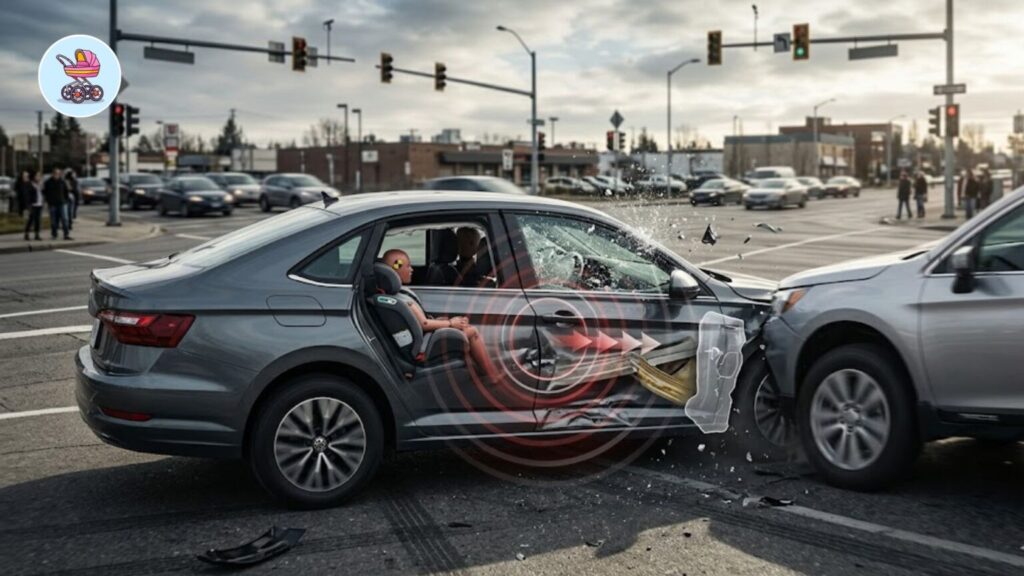
SIP isn’t a single feature — it’s a system. Most quality seats combine three layers of protection working together.
Energy-Absorbing Foam (EPS/EPP)
EPS (expanded polystyrene) and EPP (expanded polypropylene) foam are the same materials used inside bike helmets. During a crash, this foam compresses and absorbs the force before it reaches your child’s head and body.
Not all seats use this foam. Some budget options rely only on the hard plastic shell, which provides far less energy absorption. Always check the product manual or brand website to confirm foam type.
Deep Side Wings and Headrest Design
The side wings are the padded panels you see flanking the headrest. In a real side crash, these wings physically cradle your child’s head and prevent it from swinging toward the window, door, or an adjacent car seat.
A good SIP headrest adjusts as your child grows — keeping the wing coverage correctly positioned at every stage.
Worth knowing: NHTSA’s actual FMVSS 213a sled test measures this with a number, not a guess. The standard sets a Head Injury Criterion limit of HIC15 = 570 (injury risk measured over a 15-millisecond window) using the Q3s child dummy. That’s the threshold a seat’s wings and foam have to keep your child’s head under during a simulated 30 mph side-impact sled test. A seat that only relies on a hard shell — no EPS/EPP lining — has far less margin to stay under that number than one with deep, foam-filled wings.
Reinforced Side Structure
The outer shell of a quality SIP seat uses reinforced materials — steel, aluminum, or high-density polymer — to resist deformation during impact. A seat that holds its shape protects better than one that collapses under force.
Together, these three layers work as a system: the shell stops the seat from crushing, the wings limit head movement, and the foam absorbs the remaining force.
What Does SIP Mean on [Brand] Car Seats — Brand-by-Brand Breakdown
Not every brand calls it “SIP.” Each manufacturer has its own proprietary name for side impact protection — and the quality behind that name varies significantly. Here’s what the label actually means on the seats parents buy most.
Nuna — TSIP (True Side Impact Protection)
Nuna uses the term TSIP, which stands for True Side Impact Protection. It includes deep side wings with EPS energy-absorbing foam and a reinforced headrest that adjusts as your child grows. Nuna’s TSIP is one of the more substantive implementations — the foam is real, the wings are deep, and the headrest keeps coverage aligned at every height setting. Found on: Nuna RAVA, Nuna EXEC, Nuna AACE.
Worth knowing: TSIP is one of the few branded SIP systems that also uses a gel layer (Aeroflex) alongside the EPS foam, which is why it’s often positioned as a step above a standard foam-and-wing setup — though gel layers aren’t independently required or measured by FMVSS 213a.
Britax — SafeCell Impact System
Britax doesn’t use the “SIP” label. Instead, they call it the SafeCell Impact System, which combines a steel frame, EPP foam lining, and an energy-absorbing base that compresses during a crash to manage crash forces. The headrest wings on Britax seats (especially the One4Life and Poplar) are among the deepest available. This is a genuinely multi-layered system, not a marketing label. Found on: Britax One4Life, Britax Poplar, Britax Poplar S..
Chicco — Side Impact Protection with SuperCinch Harness
Chicco car seats include side impact foam in the headrest and torso zones, but Chicco markets it as part of a broader safety package rather than giving it a standalone SIP label. The SuperCinch harness tightening system is the feature Chicco emphasizes most. Side impact foam quality varies by model — higher-end seats like the Chicco Fit4 have more substantive EPS coverage than entry-level options. Found on: Chicco Fit4, Chicco NextFit, Chicco KeyFit 35.
Graco — Simply Safe Adjust + Side Impact Testing
Graco doesn’t brand their side impact protection with a unique name. Their seats are marketed around Simply Safe Adjust (no-rethread harness) and general side impact testing compliance. What matters more with Graco: after FMVSS 213a, all new Graco convertible seats must pass the federal side impact test — so compliance is now baseline, not optional. Found on: Graco SlimFit3 LX, Graco Turn2Me, Graco 4Ever
Evenflo — SureSafe Installation + Side Impact Tested
Evenflo labels their harness system SureSafe and markets most seats as “side impact tested” — but “tested” does not mean the same thing as passing a federal standard. Before FMVSS 213a took effect, Evenflo ran their own internal side impact tests. Under the new 2026 standard, their seats must now meet the federal requirement. Check the model year on any Evenflo seat you’re buying — pre-2026 models were tested to Evenflo’s internal standard only. Found on: Evenflo Revolve 360, Evenflo Gold Series.
Cosco / Safety 1st — Basic Shell, No Dedicated SIP System
Budget seats from Cosco (including the Scenera Extend) and Safety 1st entry-level models typically do not include EPS or EPP foam. Protection comes from the hard plastic shell alone. These seats are not unsafe — they meet federal crash standards — but they offer less energy absorption in a side impact compared to seats with dedicated foam and deep wings. If side impact protection is a priority, these seats are the weakest option in the market.
Quick Reference — SIP by Brand
| Brand | SIP Name | Real Foam? | Adjustable Wings? |
|---|---|---|---|
| Nuna | TSIP | Yes — EPS | Yes |
| Britax | SafeCell | Yes — EPP | Yes |
| Chicco | Not labeled | Varies by model | Yes (higher-end) |
| Graco | Not labeled | Varies by model | Yes |
| Evenflo | “Side Impact Tested” | Varies | Yes |
| Cosco / Safety 1st | None | No | No |
Is Side Impact Protection Now Required by Law in the US?
This is one of the most common questions parents ask — and the answer changed in 2026.
The short answer: Yes, as of 2026, all new car seats sold in the US must pass a federal side impact crash test.
Here is what that actually means for parents shopping right now.
What is FMVSS 213a?
FMVSS 213a is the updated federal car seat safety standard issued by the National Highway Traffic Safety Administration (NHTSA). The “a” amendment added a mandatory side impact test to the existing frontal crash requirements that have been in place since the 1970s.
Before this update, there was no federal side impact test for child car seats in the United States. Brands could claim “side impact tested” based entirely on their own internal testing — with no independent standard to measure against. That is why two seats could both say “side impact tested” on the box while offering very different levels of actual protection.
What does the new test involve?
The FMVSS 213a side impact test uses a moving deformable barrier to simulate a vehicle struck from the side at roughly 30 mph — a T-bone-style crash. A Q3s child test dummy is seated in the car seat, and sensors measure how far the head travels sideways (head excursion) plus the forces transmitted to the head and chest.
To pass, a seat must keep the dummy’s head within a defined boundary and keep the Head Injury Criterion under the HIC15 = 570 limit. Seats that rely only on a hard plastic shell without foam or deep side wings have far less margin to stay under that threshold.
When does it take effect?
FMVSS 213a’s compliance date is December 5, 2026. It applies to harnessed car seats made for children up to 40 lbs or 43.3 inches tall — infant, convertible, all-in-one, and combination seats used in harness mode. Backless boosters are not covered.
What this means practically: the rule applies to manufacture date, not purchase date, and it isn’t retroactive. A seat manufactured on or after December 5, 2026 must pass the federal side impact test. A seat manufactured before that date — including seats currently sitting in store inventory — can still be sold and used legally even if it wasn’t tested to 213a; it simply wasn’t required to be. Several manufacturers, including Chicco, have already been building seats to the new criteria ahead of the deadline.
When in doubt, check the manufacture date on the seat’s label (not the purchase date), and confirm on NHTSA.gov whether that specific model has been tested under 213a.
Does this make “SIP” labels meaningless now?
Not entirely — but the gap has narrowed. Before 213a, a seat with a strong SIP system (real foam, deep wings) was meaningfully safer than a bare-shell seat in a side crash, because there was no floor. Now that there is a federal floor, all compliant seats offer a baseline level of side impact protection.
What SIP branding still tells you: seats with dedicated foam systems and deep adjustable wings typically exceed the minimum standard — they are not just passing the test, they are absorbing more force. For parents who want maximum protection beyond the legal minimum, a seat with genuine EPS/EPP foam and deep side wings remains the better choice.
Does Every Car Seat Have Side Impact Protection?
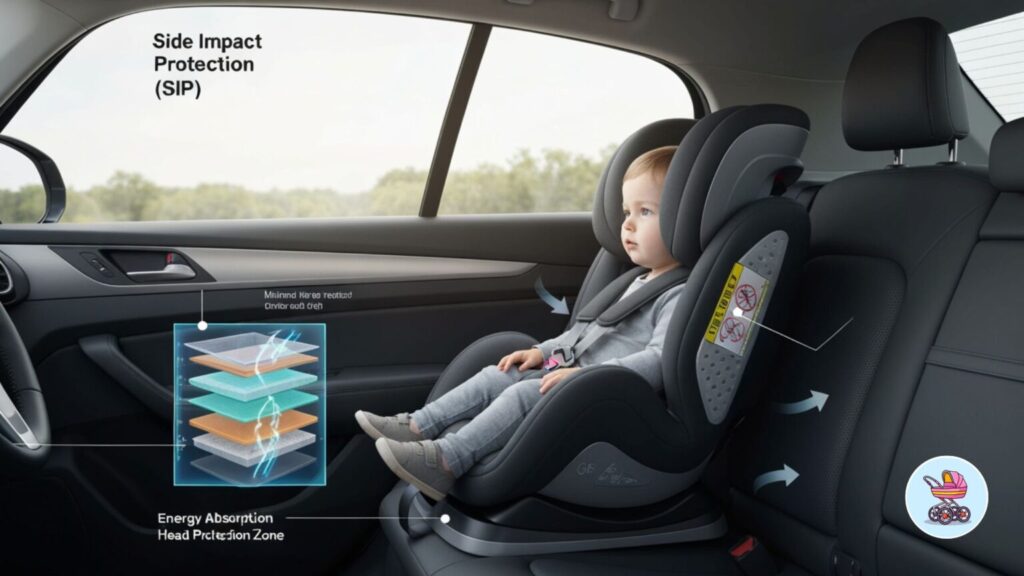
All harnessed car seats provide some level of side protection — the shell itself creates a barrier. But the quality varies enormously.
Here’s a quick breakdown by seat type:
- Infant car seats — rear-facing position + enclosed shell provides strong baseline protection. Look for EPS foam and deep headrest wings for maximum benefit.
- Convertible car seats — protection level depends heavily on the brand’s SIP design. This is where EPS foam and headrest quality matter most.
- All-in-one seats — same as convertibles; check foam type and wing depth.
- Booster seats (backless) — minimal SIP. The child relies on the vehicle seatbelt and side curtain airbags. FMVSS 213a does not apply to backless boosters.
Seat position also matters. The center rear seat is statistically the safest position in the vehicle — further from any side impact point. For families who frequently use the outboard rear seats, strong SIP features become even more critical.
For parents considering swivel seats, I’ve compared the rotating car seats that offer the strongest side-impact protection alongside their convenience features.
How to Know If Your Car Seat Has Good Side Impact Protection
Don’t rely on the marketing alone. Here’s what to actually check:
- Deep side wings that extend at least to shoulder height (ideally head height)
- EPS or EPP foam lining — confirmed in the manual or on the brand’s website
- Adjustable headrest with SIP built in at every height position — not just the top
- FMVSS 213a compliance — on the label, packaging, or confirmed by the manufacturer
- The brand explicitly describes their SIP system — vague “tested for side impact” language is a red flag
Also consider pairing your SIP seat with other safety features. An anti-rebound bar and SIP together create a strong combined defense — the anti-rebound bar reduces rotational forces in frontal crashes while SIP handles lateral impacts.
Worth knowing: manufacturer spec sheets rarely spell out foam type in the marketing copy — it’s usually buried in the owner’s manual or a materials/safety FAQ page. If a brand’s page only says “side impact tested” with no mention of EPS/EPP foam, wing depth, or a 213a compliance date, treat that as a gap, not a given. Compare it directly: Nuna’s TSIP and Britax’s SafeCell both name their foam type and wing engineering outright — Cosco and entry-level Safety 1st seats don’t, because there isn’t one to name.
Recommended Products
Here are three car seats that combine strong SIP systems with reliable real-world performance. Each one is well-suited for US families in 2026.
Britax One4Life ClickTight
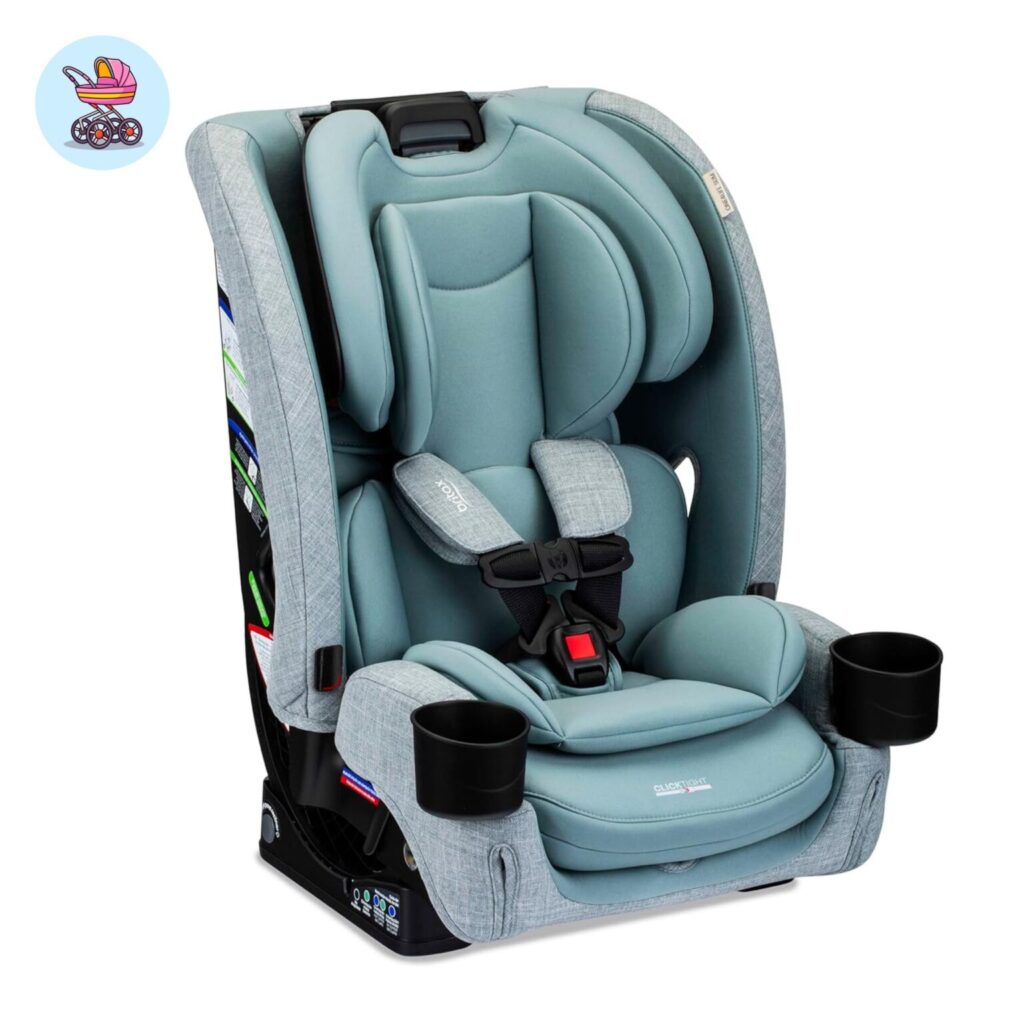
The Britax One4Life is one of the most trusted all-in-one seats among US parents, and its SafeCell Impact Protection system is a key reason why. It combines a steel-reinforced frame, EPS foam energy absorption, and deep side walls to reduce crash forces before they reach your child. It grows from 5 lbs (newborn) to 120 lbs (booster), making it the last seat most families will ever need to buy.
⭐ Best For: Families who want one seat from birth through elementary school with maximum SIP coverage
Key Specs:
| Feature | Detail |
| Weight Range | 5–120 lbs |
| Rear-Facing Limit | Up to 50 lbs |
| Forward-Facing Limit | Up to 65 lbs (harnessed) |
| FMVSS 213 Compliant | Yes |
PROS:
✅ SafeCell steel frame + EPS foam — industry-leading SIP system
✅ ClickTight installation — nearly foolproof for any parent
✅ True all-in-one longevity — one seat, many years
CONS:
❌ Wide design — may not fit three-across in smaller vehicles
❌ Premium price point
Graco Extend2Fit 3-in-1
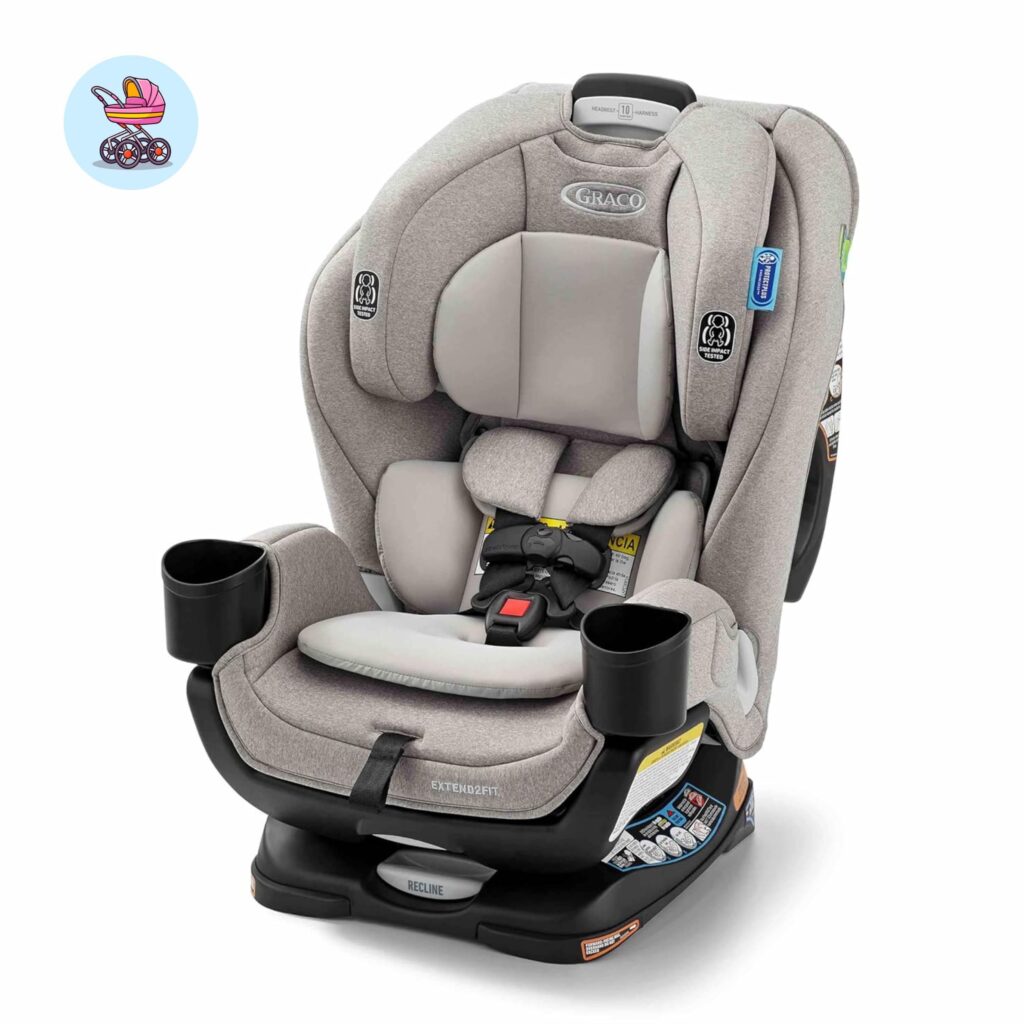
The Graco Extend2Fit is one of the most popular convertible seats in the US for good reason. Its ProtectPlus Engineered system is tested to both the newest side-impact and frontal-impact standards — making it one of the best-value 213a-ready seats available today. The 4-position extension panel gives rear-facing children up to 5 inches of extra legroom, letting them stay rear-facing longer.
⭐ Best For: Budget-conscious parents who want current 213a-tested side-impact protection with extended rear-facing
Key Specs:
| Feature | Detail |
| Weight Range | 4–65 lbs |
| Rear-Facing Limit | Up to 50 lbs |
| Forward-Facing Limit | Up to 65 lbs (harnessed) |
| FMVSS 213 Compliant | Yes (ProtectPlus — 213a tested) |
PROS:
✅ ProtectPlus tested to latest side + frontal impact standards
✅ Extended rear-facing up to 50 lbs — one of the best in class
✅ Strong value — premium safety at a mid-range price
CONS:
❌ No rotation feature — standard install only
❌ Harness rethread required for height adjustments on some models
Evenflo Revolve 360 Extend
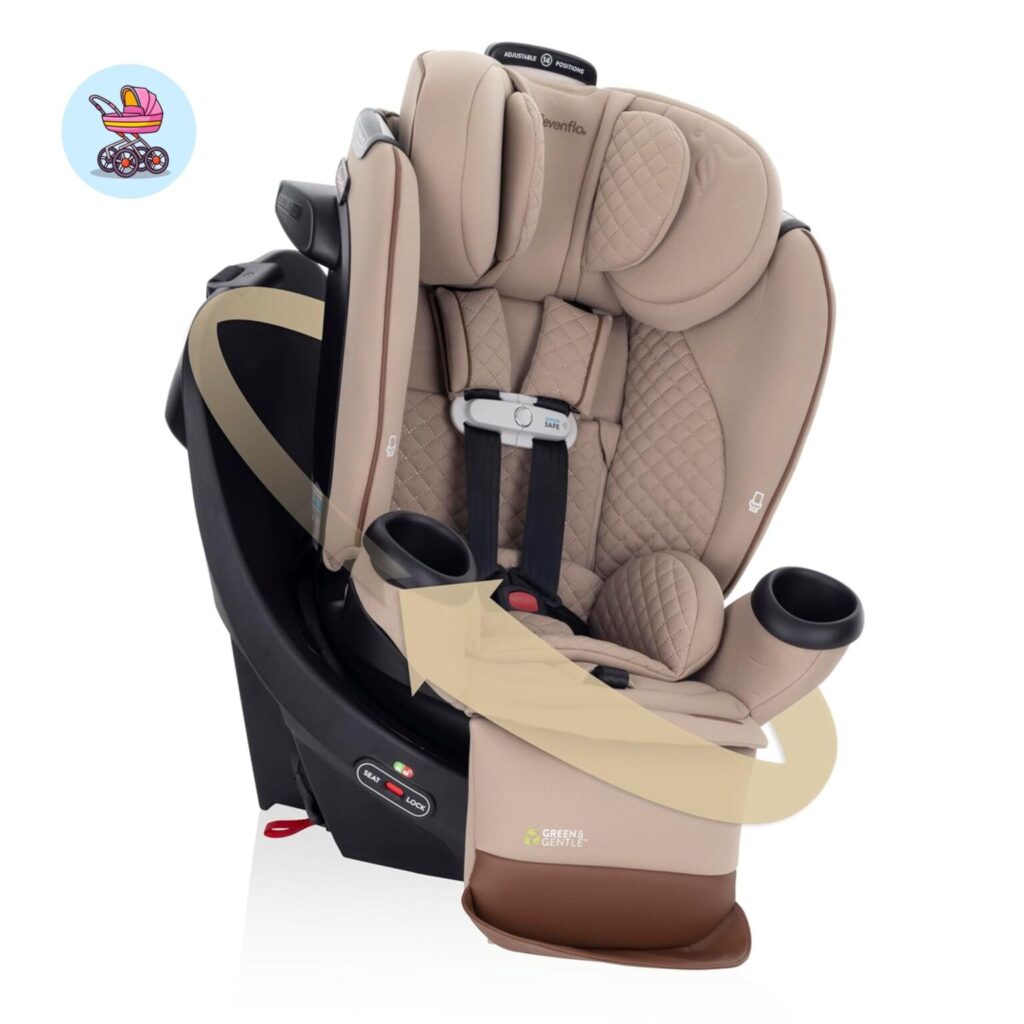
The Evenflo Revolve 360 Extend is my top pick for parents who want a rotating seat that doesn’t sacrifice side-impact protection. The 360-degree swivel makes buckle-up easy on your back — and the extended rear-facing limit (up to 50 lbs) keeps your child safer for longer. I’ve done a full deep-dive on this seat in my Evenflo Revolve 360 Extend review if you want every detail.
⭐ Best For: Parents with back problems or multiple children who need a fast, rotating install with solid SIP
Key Specs:
| Feature | Detail |
| Weight Range | 4–65 lbs |
| Rear-Facing Limit | Up to 50 lbs |
| Forward-Facing Limit | Up to 65 lbs (harnessed) |
| FMVSS 213 Compliant | Yes |
PROS:
✅ 360-degree rotation — easiest buckle-up of any seat on this list
✅ Extended rear-facing to 50 lbs
✅ Strong energy-absorbing shell + deep side wings
CONS:
❌ Heavier than non-rotating seats — harder to move between vehicles
❌ Larger footprint — check vehicle fit before buying
Where to Buy — Best Price Today
All three seats above are available directly on Amazon from authorized sellers. I always recommend buying from Amazon, the brand’s official website, or a major retailer like Target or Buy Buy Baby.
Avoid third-party marketplace sellers with no return policy — a used or counterfeit car seat is never worth the risk.
Frequently Asked Questions — SIP on Car Seat
Q1. What does SIP stand for on a car seat?
SIP stands for Side Impact Protection. It refers to design features — including energy-absorbing foam, deep headrest wings, and a reinforced shell — built into a car seat to protect your child during a side-impact collision.
Q2. Do all car seats have side impact protection?
Not equally. Budget seats from brands like Cosco and entry-level Safety 1st models often use a basic plastic shell with minimal foam. Seats with EPS foam, deep side wings, and FMVSS 213a certification provide meaningfully higher protection.
Q3. What is the difference between SIP and TSIP?
TSIP — True Side Impact Protection — is Nuna’s proprietary term for their advanced system, which includes deep headrest wings with EPS foam and an Aeroflex gel layer. Standard SIP in other brands may refer only to foam lining or wing design, without the structural reinforcement Nuna includes.
Q4. Is side impact protection required by US law?
Starting December 5, 2026, yes — for harnessed seats made for children up to 40 lbs or 43.3 inches tall. The updated FMVSS 213a standard requires those seats to pass a federal side-impact crash test before being sold in the US, and it applies by manufacture date, not purchase date. Before this rule, side-impact testing was voluntary and brand-defined, with no federal benchmark to compare against.
Q5. What is FMVSS 213a and does it apply to my seat?
FMVSS 213a is the federal regulation requiring standardized side-impact crash tests for all harnessed seats for children up to 40 lbs. If your seat was manufactured before December 5, 2026, it may not have been tested to this standard — but it remains legal and safe to use if unexpired and undamaged.
Q6. Do I need to replace my car seat because of the new 2026 standard?
No. If your seat is unexpired, hasn’t been in a crash, and is installed correctly, keep using it. When you buy your next seat, look for the FMVSS 213a compliance label.
Q7. What does “side impact tested” mean on a car seat box?
Before FMVSS 213a, it meant the brand ran its own internal test — no federal standard existed. After the 2026 update, it should mean the seat passed NHTSA’s official test. Always check the manufacture date and verify at NHTSA.gov if you need confirmation.
Q8. Which car seat has the best side impact protection in 2026?
For all-in-one longevity, the Britax One4Life ClickTight uses a steel-reinforced SafeCell system with EPS foam and deep side walls. For rotating convenience, the Evenflo Revolve 360 Extend offers deep wings at a mid-range price. For budget buyers, the Graco Extend2Fit includes ProtectPlus protection — verify the manufacture date for FMVSS 213a compliance.
Q9. Does the center rear seat position reduce the need for SIP?
Statistically, the center rear position is the safest spot — furthest from any side-impact point. But it doesn’t eliminate the value of a strong SIP seat. Not all vehicles have LATCH anchors in the center, so check your vehicle manual before choosing that position.
Q10. What are side impact beams in cars, and how do they work with car seat SIP?
Side impact beams are steel reinforcements built into car doors to absorb crash energy before it reaches passengers. Car seat SIP adds a second layer of protection specifically for the child — the two systems work together but serve different purposes.
Final Thoughts
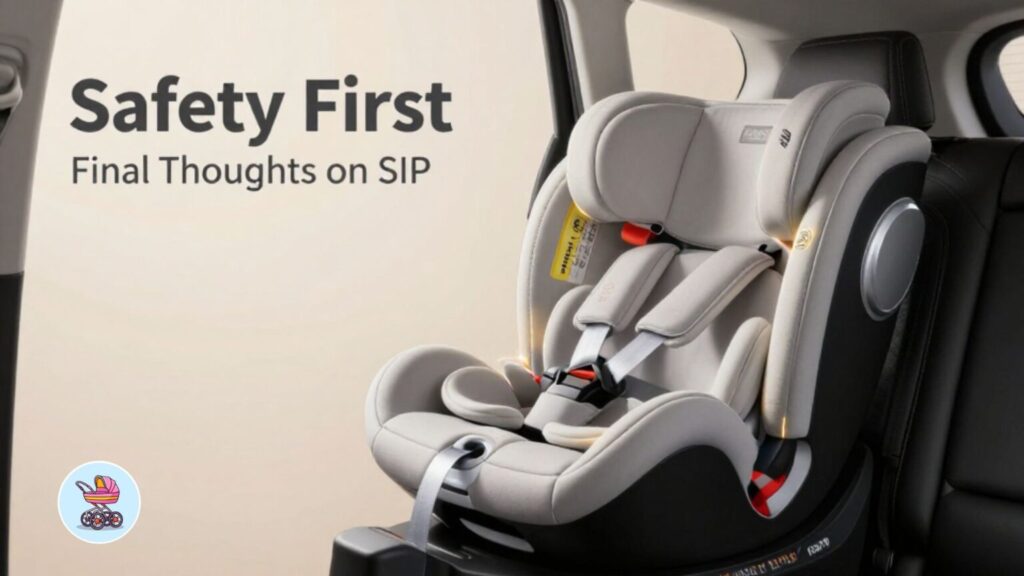
SIP on a car seat means Side Impact Protection — and thanks to the new FMVSS 213a federal standard, it finally has a real benchmark behind it.
When you shop for your next seat, don’t just look for the logo. Look for EPS or EPP foam, deep side wings that cover headrest height, and the FMVSS 213a compliance label. Those three things together tell you the seat has passed a meaningful test — not just a marketing claim.
My top pick for most US families in 2026: the Graco Extend2Fit for best value, or the Britax One4Life if you want one seat for the long haul.
Saim Mughal is the founder of CareForCuties.com. She researches and tests baby gear for American families — with a focus on safety, usability, and honest reviews.
5 Responses