Disclosure: This article contains Amazon affiliate links. As an Amazon Associate, I earn from qualifying purchases.
1. Introduction
It’s 2pm, the sidewalk is radiating heat, and your baby’s stroller canopy just isn’t cutting it anymore. If you’ve ever pulled over mid-walk to rearrange a blanket over the hood, only to have it slide off three steps later, you already know why a sun shade stroller accessory has become one of the most searched baby gear upgrades in the US this year.
Pediatricians consistently point out that babies under 6 months shouldn’t get direct or indirect sun exposure at all, because their skin can’t handle it and overheating risk goes up fast (source: HealthyChildren.org, American Academy of Pediatrics).
A stroller canopy alone rarely blocks enough sun once it hits an angle, which is exactly the gap a good sun shade fills — without you having to hover over a blanket every five minutes.
Table of Contents
2. Key Features
Not every “sun shade” on Amazon actually does what it promises. Here’s what separates the ones that hold up on a real stroller from the ones that flap off at the first gust of wind.
Construction Quality and Materials
Most best-selling designs use mesh or breathable polyester materials with UV protection (UPF 40+ to 50+). These items let airflow while inhibiting damaging sun rays, hence keeping babies cool and comfy.
Weight and Portability
Lightweight and foldable are sunshade extensions. Perfect for families on the go, they easily fit into diaper bags or baby baskets.
Convenience of Use
Typically less than one minute is required for setup. Parents can attach or detach the shade swiftly thanks to Velcro closures, adjustable straps, or snap hooks.
Durability and Safety
Top-rated alternatives are constructed with non-toxic, baby-safe materials and strengthened sewing. They stay safe even amid quick walks or gusts of wind.
Compatibility
Ideal for daily chores, car travel, and holidays, most models are made to fit travel systems, umbrella strollers, jogging strollers, and full-size strollers.
3. Which Sun Shade Fits Your Baby’s Age?
Not every shade is built for every stage, and this is where most parents overspend on the wrong one.
Newborn to 6 months (lying flat): Look for a full-coverage shade designed for a flat carrycot or reclined seat — it should drape over the whole opening, not just clip to the hood. Babies this age shouldn’t get direct sun at all, so more coverage is better here.
6 months and sitting up: Once your baby is upright, a shade needs a front panel or mesh window so they can still see out — a shade made for lying-flat babies will feel like a blackout box and may cause fussing.
Toddlers in a stroller seat: At this stage, adjustable, multi-angle shades work better than fixed ones, since toddlers shift position and kick at fixed panels.
Twins or double strollers: Standard universal shades are sized for single strollers. If you have a side-by-side double, look specifically for a “double stroller” or “twin” labeled shade — a single-width shade stretched across two seats won’t seal properly and leaves gaps.
4. Benefits for USA Parents

A good sun shade doesn’t just block sun — it buys back the parts of your day that a stroller walk usually eats up.
No more blanket-wrestling: Once it’s clipped or strapped on, it stays put through a full grocery run or a mile-long walk, so you’re not stopping every block to readjust a slipping cover.
Free hands, faster errands: With both hands off the shade, you can actually push the stroller one-handed, check your phone, or manage a toddler who’s wandering off.
Longer, deeper naps: A shaded, dimmer stroller interior helps some babies settle into naps faster and stay asleep through noise — handy for restaurant outings or flights.
Fewer overheated meltdowns: Direct sun through mesh canopies can spike stroller-seat temperature within minutes on a 85°F+ day; a breathable shade cuts that glare without sealing in heat the way a thrown-over blanket does.
5. Advantages and Drawbacks
Advantages
Blocks UV rays a stock canopy can’t reach, especially in early morning or late afternoon sun.
Packs down small enough for a diaper bag side pocket.
Most clip on or buckle on in under a minute, no tools needed.
Fits umbrella strollers, jogging strollers, and most full-size travel systems.
Keeps baby cooler and calmer on longer outings, which usually means a calmer walk for you too.
Cons:
Extra-wide or double strollers sometimes need the straps repositioned to sit flush.
UPF 50+ mesh options cost more than basic clip-on shades — expect roughly $15 to $45 depending on brand and coverage.
Sheer or single-layer mesh can let light through at low sun angles, so check reviews for actual UPF rating, not just “UV protection” on the label.
6. Five Most Effective Applications
Here’s where a sun shade earns its keep the most, based on how parents actually use theirs day to day.
1. Trips
Ideal for theme parks, airport terminals, beach strolls, and sightseeing excursions.
2. City Walks and Errands
Excellent for shopping trips and daily stroller strolls.
3. Restaurant Naps and Outdoor Dining
A shade that dims the stroller interior is what lets a baby actually nap through a two-hour brunch or a noisy outdoor patio, instead of waking up every time a server walks by.
4. Car Match-Up
Good with travel systems for transfers between vehicle and stroller.
5. Home and Outside Usage
Perfect for garden excursions, local strolls, and outdoor activities.
7. Top 5 Best-Selling Sun Shade Stroller Brands (Amazon Favorites)
Below are five sun shades that show up again and again in US parent forums and Amazon best-seller lists, each suited to a different kind of parent.
1. SnoozeShade Original Deluxe
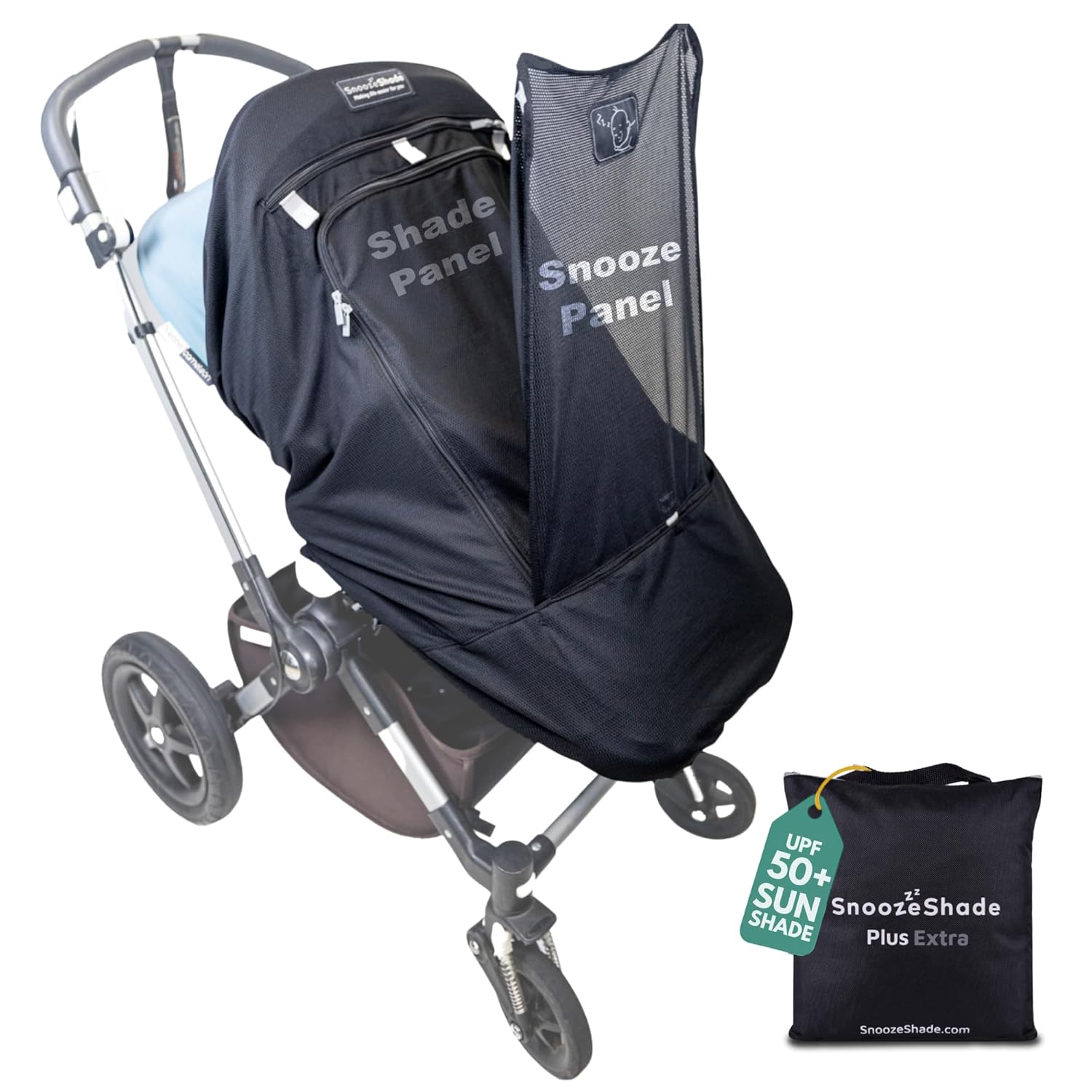
This is the one parents reach for when a stock canopy just isn’t cutting it for naps. It’s rated UPF 40+ and blocks around 97.5% of UV rays, made from a two-layer breathable mesh that fastens with quiet snap poppers instead of loud Velcro — a small detail that matters if you’re trying not to wake a sleeping baby mid-park-loop. Typically runs around $35 to $45.
Best for: Best naps and strongest overall UV protection
Pros
- Excellent UV protection
- Helps babies nap longer
- Breathable mesh panels
- Universal stroller fit
- High-quality fabric
Cons
Takes setup practice
Higher price point
Slightly bulky folded
2. Dooky Universal Stroller Sunshade

Best for: Stylish sun protection · typically around $20 to $30
Pros:
Adjustable coverage angle
Fashion-forward designs
Lightweight and compact
Easy to attach
Great for city parents
Cons:
Less airflow than mesh styles
Not ideal for very hot climates
3. Orzbow Baby Stroller Sunshade

Best for: Budget-conscious parents · typically under $20
Pros:
Affordable price point
UV-protective mesh fabric
Easy Velcro installation
Lightweight and breathable
Good fit for travel strollers
Cons:
Material feels thinner
May shift on jogging strollers
4. Jan & Jul Adjustable Stroller Sun Shade

Best for: Hot and sunny states · typically around $30 to $40
Pros:
UPF 50+ certified protection
Extra-large coverage
Breathable mesh design
Secure adjustable straps
Trusted baby brand
Cons:
Slight learning curve for setup
Higher price than basic mesh options
5. MARLIFER Sun Shade for Travel Strollers

MARLIFER’s listing claims it blocks around 97% of UV rays — solid coverage for the price, though as with any mesh shade, actual performance depends on how snug the fit is against your specific stroller frame.
Best for: Everyday errands
Pros:
Blocks 97% UV rays
Universal stroller compatibility
Quick tool-free installation
Lightweight and travel-friendly
Improves baby comfort
Cons:
Not rainproof
Needs occasional adjustment
Dark color absorbs heat
8. Quick Comparison at a Glance
| Shade | Best For | Price Range | UV Protection |
|---|---|---|---|
| SnoozeShade Original Deluxe | Naps, strongest overall protection | $35–$45 | UPF 40+, ~97.5% |
| Dooky Universal Stroller Sunshade | Style-focused city parents | $20–$30 | UPF not certified — check listing |
| Orzbow Baby Stroller Sunshade | Tight budgets | Under $20 | UV-protective mesh |
| Jan & Jul Adjustable Sun Shade | Hot, sunny climates | $30–$40 | UPF 50+ |
| MARLIFER Sun Shade | Everyday errands | Under $20 | ~97% UV blocked |
9. Is a Sun Shade Stroller Actually Safe? What Pediatricians Say
A shade that traps heat does more harm than the sun it’s blocking. Children’s Health notes that draping a blanket over a stroller can make the enclosed space dangerously hot, and recommends a proper stroller shade or umbrella instead precisely because it protects arms and legs without sealing off airflow (source: Children’s Health, “Keeping Your Baby Safe and Cool in Summer“).
A few ground rules that matter more than any spec sheet:
- Check on your baby every 10 to 15 minutes in warm weather, especially with a fuller-coverage or blackout-style shade.
- Avoid parking the stroller in direct sun for long stretches once the heat index passes 90°F — pediatric guidance is to move to shade or indoors at that point, shade or no shade.
- Pick mesh over solid vinyl if you’re in a hot, humid climate; solid blackout covers are better suited to nap time in shorter bursts, not all-day wear.
- Never substitute a plain blanket for a proper shade — it blocks airflow the mesh designs are built to allow.
Know the warning signs. Take your baby out of the stroller and into shade or AC right away if you notice a flushed or red face, sweating, unusual fussiness, or skin that feels hot to the touch — these are early signs of overheating, not just a warm baby (source: Children’s Health, “Keeping Your Baby Safe and Cool in Summer”).
10. Frequently Asked Questions
1. Is a sun shade stroller worth buying?
For most families, yes — especially if you’re outside more than 20-30 minutes at a stretch. It’s a $15-$45 fix for a problem stock canopies don’t fully solve, and it pays off fastest for parents in sunnier states like Arizona, Florida, or Texas.
2. Will it fit my stroller?
Universal clip-on and strap-on designs fit most umbrella, jogging, and full-size strollers with a hood to attach to. Double and side-by-side strollers are the exception — check the product listing for “double stroller compatible” before buying, since most universal shades are sized for single strollers.
3. Can I use one on a jogging stroller?
Yes, but look for a shade with reinforced straps or buckles rather than thin elastic — jogging strollers move more, and a shade rated only for casual walks can work loose on a run.
4. Is it good for air travel and vacations?
It’s one of the more useful things to throw in a carry-on. Lightweight mesh shades fold into a pouch the size of a small water bottle and give you sun cover the second you land somewhere hot.
5. How do I clean it?
Most are hand-washable or machine washable on a cold, gentle cycle — check the tag first, since sturdier frame-and-fabric combos may need hand washing to protect the frame.
6. Does UPF rating actually matter, or is it marketing?
It matters. UPF 50+ blocks roughly 98% of UV rays, UPF 40+ blocks around 97%. Both are strong, but if you live somewhere with intense year-round sun, UPF 50+ is worth the small price difference.
7. Can a stroller sun shade also work on a car seat?
Some can. Brands like Manito and SnoozeShade make shades built to attach to both a stroller hood and an infant car seat handle, which is worth it if you’re constantly swapping the car seat in and out of the stroller base. Check the product listing for “car seat compatible” before assuming a stroller-only shade will fit — the strap length and attachment points are usually different.
11. Conclusion
The right sun shade doesn’t just protect your baby’s skin — it buys you back the parts of the day that overheated meltdowns and slipping blankets usually take away. Whether you’re doing the school pickup loop or flying cross-country for a family visit, a shade that actually stays put is one of the cheapest upgrades that makes every outing easier.
If you’re also researching your next stroller purchase, our guide to the best strollers for Disney trips covers shade and canopy coverage for theme-park-specific use, and our guide to flame-retardant-free car seats is worth a look if sun and material safety are both on your radar.
guide to the best strollers for Disney trips
guide to flame-retardant-free car seats
This guide is put together by Saim Mughal, founder of Care for Cuties, who tests and reviews baby gear firsthand with the goal of helping US parents avoid the guesswork (and the wasted money) that comes with buying blind online.
9 Responses