

Eye Color Calculator Tool (Baby Eye Color Calculator)

Curious minds always ask, what eye color will my baby have, and that’s where this baby eye color calculator with grandparents becomes fascinating. This smart interactive eye color calculator uses parental genetics and family traits to offer instant eye color prediction with realistic probabilities you can actually understand.
This advanced genetic eye color calculator online blends eye color genetics, genetic inheritance patterns, and even eye color from grandparents to improve results. Unlike basic tools, this eye color calculator parents and grandparents considers deeper family eye color history, giving you a more refined phenotype prediction experience.
Table of Contents
Enter Parents’ Eye Colors
Everything starts with you. When you input parent eye color, the baby eye color genetics calculator analyzes dominant and recessive genes linked to eye color genes. This step reflects how genotype vs phenotype eye color works in real life.
Add Grandparents’ Eye Colors (Optional)
Here’s where things get exciting. By selecting grandparent eye color influence, the baby eye color predictor with grandparents taps into hidden recessive genes from grandparents. This multi-generation eye color prediction helps uncover rare traits that might skip a generation.
Eye Color Probability Results
Once you click calculate, the baby eye color probability calculator shows eye color percentage results instantly. These probabilistic results eye color are based on real genetic calculation models, helping you understand the true chances of baby eye color in a simple way.
👉 Explore more helpful baby tools and guides on our homepage:
https://careforcuties.com/
How to Use the Baby Eye Color Calculator
Getting started feels easy, even if genetics sounds complex. This eye color prediction tool free works like a guided system where you simply follow steps and receive real-time eye color results without confusion or guesswork.
To begin, choose both parents’ eye colors, then optionally select grandparent eye color to enhance accuracy. This child eye color predictor tool uses eye color prediction with family history to provide a deeper look into your baby’s possible appearance.
Step-by-Step Instructions
Start by selecting eye colors for both parents. Then add grandparents if known. Finally, click calculate. Within seconds, the eye color inheritance calculator generates outcomes using polygenic inheritance eye color models and modern genetics complexity eye color principles.
Tips for More Accurate Predictions
Accuracy improves when you include more family data. Use real biological details and avoid guessing. Remember, even the best baby eye color calculator accurate tools rely on hereditary traits and cannot guarantee results due to natural genetic traits eye color variation.
💡 If you’re planning for your baby’s needs, don’t miss this guide:
Best stroller for newborn →best stroller for newborn
Understanding Your Results (Baby Eye Color Prediction Explained)
When results appear, they show probabilities, not promises. This genetic estimation tool calculates outcomes based on eye color inheritance patterns and displays them clearly so you can understand what’s likely and what’s rare.
You’ll notice percentages like 60% brown or 20% blue. These reflect offspring eye color chances influenced by eye pigmentation, melanin in iris, and inherited family traits, making each prediction unique and personal.
What Eye Color Percentages Mean
Each percentage represents likelihood, not certainty. For example, higher numbers suggest stronger influence from dominant and recessive genes, especially when traits like brown eyes dominant are involved in the genetic mix.
Most Likely vs Less Likely Colors
The highest percentage shows the most probable outcome. However, less likely colors still matter. Rare outcomes occur when hidden genetic traits eye color or recessive genes from grandparents come into play unexpectedly.
📊 Sample Eye Color Probability Table
| Parents Eye Color | Most Likely | Less Likely |
| Brown + Brown | Brown | Blue/Green |
| Blue + Blue | Blue | Rare Brown |
| Brown + Blue | Brown | Blue/Green |
👉 Planning travel with your baby? Check this:
Best lightweight travel stroller → best lightweight travel stroller
What Determines a Baby’s Eye Color?
Ever wondered why siblings can look so different? The answer lies in genetics and how eye color genes interact in complex ways. A baby eye color genetics calculator studies genetic inheritance patterns to estimate outcomes, yet real biology often surprises us with unexpected combinations.
At its core, eye color inheritance depends on multiple factors, not just one gene. This is called polygenic inheritance eye color, where several genes work together. That’s why a baby eye color calculator with grandparents can better reflect real-life variation by including deeper family eye color history.
Role of Genetics
Everything begins with parental genetics. Each parent passes down one version of a gene, forming the baby’s genetic blueprint. These hereditary traits shape visible features like eye color, making each child a unique mix of inherited possibilities.
Melanin and Eye Pigment
Color comes from melanin in iris, which controls how light reflects. More melanin creates darker shades like brown, while less leads to blue or gray. This process, known as eye pigmentation, plays a key role in determining final eye color.
Gene Dominance Explained
Some traits dominate others. For example, brown eyes dominant genes often override lighter ones like blue. However, hidden dominant and recessive genes can combine in surprising ways, especially when influenced by baby eye color from grandparents genes.
💡 Want to explore baby travel essentials too? Check this:
Best affordable car seat and stroller
How Eye Color Is Inherited
Genetics doesn’t play a simple game. When you try to calculate baby eye color from parents, you’re actually exploring layered eye color inheritance rules shaped by genetic inheritance patterns and unseen family traits. This is why a baby eye color calculator with grandparents often gives deeper insights than basic tools.
Every child receives genetic material from both parents, yet hidden traits can emerge from earlier generations. That’s where multi-generation eye color prediction becomes powerful. A smart eye color inheritance calculator considers baby eye color from grandparents genes, helping you understand surprising outcomes in offspring eye color.
Parent-to-Child Gene Transfer
Each parent passes one allele, forming a pair that defines eye color. These eye color genes combine into a genetic code that determines appearance. This process reflects real genetic calculation used by every advanced child eye color predictor tool today.
Blue vs Brown Eye Genetics
Traditionally, people believed brown eyes dominant always win over blue eyes genetics, but modern science shows it’s more nuanced. Multiple genes interact, meaning even brown-eyed parents can carry hidden blue traits within their genotype vs phenotype eye color.
Can Two Blue-Eyed Parents Have a Brown-Eyed Baby?
It’s rare, yet possible. Genetic mutations or hidden ancestry can introduce unexpected results. This is why eye color prediction not 100% accurate, even when using a reliable baby eye color probability calculator built on strong eye color genetics.
📊 Simple Eye Color Inheritance Table
| Parents Combination | Common Outcome | Rare Outcome |
| Blue + Blue | Blue | Brown |
| Brown + Blue | Brown | Blue/Green |
| Green + Blue | Green/Blue | Hazel |
👉 Planning for your baby’s comfort? Explore:
Best stroller for Disney
The Science Behind Eye Color Prediction
At first glance, predicting eye color feels simple. In reality, it’s a layered puzzle driven by genetics complexity eye color and multiple interacting genes. A modern genetic eye color calculator online uses advanced models to simulate eye color prediction with family history, offering smarter results than old-school guessing.
Today’s tools rely on real biological data, not myths. A high-quality baby eye color genetics calculator studies eye color genes, including the famous OCA2 gene eye color and HERC2 gene eye color, both of which regulate melanin in iris and overall eye pigmentation.
Modern Genetic Models vs Traditional Theory
Older models followed a simple dominant-recessive rule. However, modern science proves polygenic inheritance eye color is far more accurate. This means several genes influence the final result, making every baby eye color predictor with grandparents far more reliable than outdated charts.
Why Eye Color Is Not 100% Predictable
Even the best tools have limits. A baby eye color calculator accurate system still delivers probabilistic results eye color, not guarantees. Random mutations, hidden genetic traits eye color, and rare combinations make each prediction an educated estimate, not a fixed outcome.
📊 Eye Color Prediction Factors Table
| Factor | Impact Level | Explanation |
| Parent Eye Color | High | Direct genetic input |
| Grandparent Influence | Medium | Reveals hidden traits |
| Gene Interaction | Very High | Multiple genes combine |
| Mutation Chance | Low | Rare but possible |
👉 For smooth travel with your baby, check this guide:
Best foldable stroller
Eye Color Chart (Inheritance Probability Table)
Numbers tell a clearer story than guesses. This eye color probability chart baby helps you visualize outcomes using real genetic inheritance patterns. A reliable baby eye color calculator with grandparents often mirrors this chart by combining parental genetics and deeper family eye color history.
While charts simplify things, real life stays complex. Even a precise eye color inheritance calculator depends on polygenic inheritance eye color, where many genes interact. That’s why results vary and why tools show eye color percentage results instead of fixed answers.
Eye Color Probability Chart
| Mother | Father | Likely Outcome | Possible Variations |
| Brown | Brown | Brown (70%) | Blue/Green (30%) |
| Blue | Blue | Blue (90%) | Rare Brown (10%) |
| Brown | Blue | Brown (60%) | Blue/Green (40%) |
| Green | Blue | Green/Blue | Hazel |
| Hazel | Brown | Brown/Hazel | Green |
This table reflects how dominant and recessive genes influence offspring eye color. For example, brown eyes dominant traits often appear more frequently, while lighter shades depend on hidden recessive genes from grandparents.
Understanding this chart helps you better predict my baby eye color using both science and probability. Still, every baby remains unique due to natural genetics variation.
👉 Helpful read for parents planning outings:
Lightweight stroller for toddlers
Common Baby Eye Colors Explained
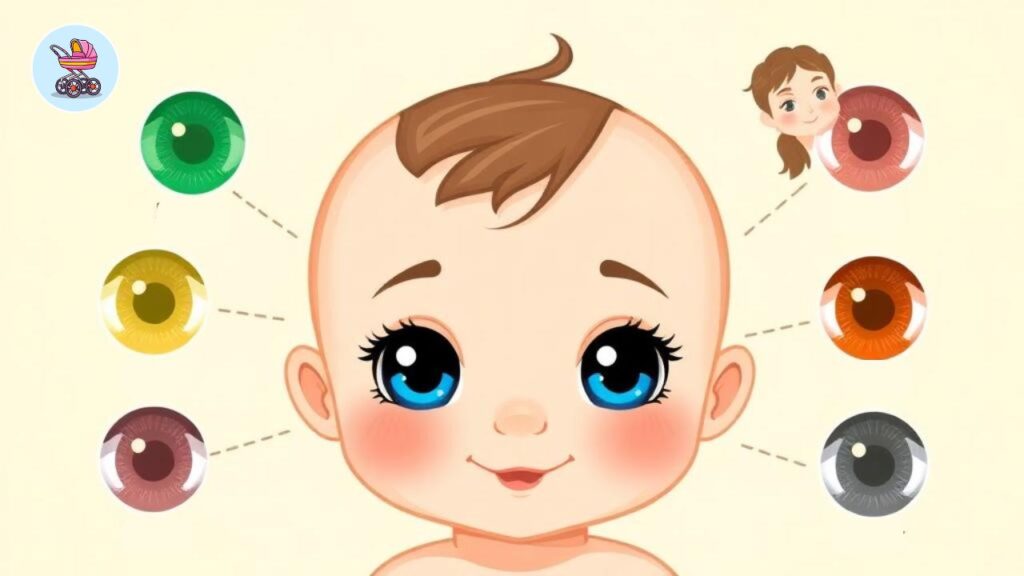
Every eye color tells a story shaped by eye color genetics and unique hereditary traits. When you use a baby eye color calculator with grandparents, you’re exploring how different shades appear through genetic inheritance patterns and hidden family traits passed across generations.
Some colors are common, while others feel rare and striking. These variations depend on melanin in iris, eye pigmentation, and how multiple genes interact. This is why a baby eye color predictor with grandparents often reveals surprising possibilities beyond what parents expect.
Brown Eyes
Brown remains the most widespread color due to brown eyes dominant genetics. High melanin in iris creates deeper tones, making brown eyes more likely in most offspring eye color predictions using any baby eye color probability calculator.
Blue Eyes
Blue eyes appear when melanin levels stay low. These shades rely on blue eyes genetics and light scattering rather than pigment. Even if rare in parents, hidden recessive genes from grandparents can influence this outcome.
Green Eyes
Green is one of the rarest shades, often linked to balanced eye pigmentation and complex polygenic inheritance eye color. This rarity makes it a fascinating result in any genetic eye color calculator online.
Hazel Eyes
Hazel combines multiple tones, often shifting between green and brown. The hazel eye color meaning reflects mixed genetic signals, shaped by both dominant and recessive traits in family eye color history.
Gray Eyes
Gray eyes are extremely uncommon. This shade forms through unique light scattering and minimal pigment, making gray eye color rare in most populations and predictions from any eye color prediction tool free.
Amber Eyes
Amber eyes display a golden tone caused by specific pigment levels. The science behind amber eye color genetics connects to variations in melanin distribution within the iris.
Heterochromia
Some individuals have two different eye colors. The heterochromia eyes meaning relates to uneven pigment distribution, often due to genetic variation or mutation in eye color genes.
👉 Discover helpful baby gear reviews here:
products detail review
Factors That Affect Eye Color Prediction Accuracy
Accuracy sounds appealing, yet biology rarely follows a strict script. Even a powerful baby eye color calculator with grandparents depends on layered genetics complexity eye color and evolving genetic inheritance patterns. That’s why predictions feel close but never perfect.
Many hidden influences shape results behind the scenes. A modern baby eye color genetics calculator evaluates family eye color history, yet factors like mutations and mixed ancestry can shift outcomes. This makes every eye color prediction with family history a smart estimate, not a certainty.
Multiple Genes Involved
Eye color isn’t controlled by one gene. It’s driven by polygenic inheritance eye color, where several eye color genes interact. This complex system influences final appearance and makes each genetic calculation more detailed than simple dominant-recessive rules.
Genetic Mutations
Sometimes, nature bends its own rules. Random mutations in genes like OCA2 gene eye color or HERC2 gene eye color can create unexpected results. These rare shifts explain why a baby may show traits not seen in immediate parental genetics.
Ethnicity & Family History
Background matters more than people think. Ethnicity influences eye pigmentation and gene distribution, while deep inherited eye traits family patterns shape outcomes. This is why including eye color from grandparents improves prediction in any child eye color predictor tool.
📊 Key Accuracy Factors Table
| Factor | Effect on Prediction | Why It Matters |
| Multiple Genes | High | Complex trait mixing |
| Mutations | Low | Rare but impactful |
| Family History | Medium-High | Reveals hidden traits |
| Ethnicity | Medium | Affects gene frequency |
👉 Must-have stroller accessory for parents:
best stroller organizer for travel
Interesting Facts About Baby Eye Color
Baby eyes are full of surprises. Most babies are born with blue or gray eyes because melanin in iris hasn’t fully developed. Over the first few months, eye pigmentation changes, and colors like brown, green, or hazel may appear. A baby eye color probability calculator can track these possibilities in a fun way.
It’s fascinating that even though brown eyes dominant are common, hidden recessive genes from grandparents can produce unexpected results. For example, two brown-eyed parents may have a blue-eyed baby. Rare outcomes like heterochromia eyes meaning show how genetics can be unpredictable. Using a baby eye color genetics calculator helps parents explore these probabilities, giving insights into offspring eye color and inherited eye traits family.
👉 Plan outdoor activities with your baby? Check this stroller guide:
Stroller rain cover
Limitations of Eye Color Calculators
Even the most advanced baby eye color predictor with grandparents has its limits. Predictions rely on genetic calculation models and polygenic inheritance eye color, but they cannot account for every random mutation or rare combination. This is why eye color prediction not 100% accurate and should be seen as a genetic estimation tool, not a guarantee.
Tools like eye color inheritance calculator give probabilistic results eye color, which show likelihoods rather than certainties. Environmental factors and subtle variations in eye pigmentation also affect final color. Understanding these limits helps parents set realistic expectations while still enjoying the insights from an interactive eye color calculator.
👉 Need a lightweight stroller for travel? Check here:
Best lightweight travel stroller
Why Do Babies’ Eye Colors Change After Birth?
Babies are often born with blue or gray eyes because melanin in iris hasn’t fully developed yet. Over the first months, melanin production increases, causing eyes to darken or change shade. This natural process explains why baby eye color genetics calculator predictions may differ from the final color seen at age one or two.
Light exposure, genetic inheritance patterns, and hidden recessive genes from grandparents all contribute to eye color changes. Even with a baby eye color probability calculator or eye color inheritance calculator, results are probabilistic. This is why final outcomes may surprise parents, reflecting the complexity of genetic traits eye color and phenotype prediction.
👉 If you need a stroller for newborns, check this:
Best Stroller for Newborn
Final Thoughts
Predicting a baby’s eye color is both fun and scientific. Using a baby eye color calculator with grandparents or a child eye color predictor tool gives parents insight into possible outcomes, blending eye color genetics, hereditary traits, and family eye color history. While probabilities are helpful, remember that eye color prediction not 100% accurate because genetics complexity eye color allows for surprises.
A smart genetic eye color calculator online can guide expectations by combining eye color genes, polygenic inheritance eye color, and grandparent eye color influence. Ultimately, every baby is unique, and the joy lies in watching offspring eye color unfold naturally, no matter what the calculator predicts. Using these tools alongside baby essentials can make parenting both fun and informed.
H2: FAQs – Baby Eye Color Calculator
Do grandparents influence baby eye color?
Yes, grandparents can pass recessive genes, affecting your baby’s eye color through hidden family traits.
What color will my baby’s eyes be with grandparents’ eyes?
Using parents and grandparents genetics, your baby’s eyes could reflect a mix, including less obvious recessive colors.
How can I tell what color my baby’s eyes are going to be?
You can estimate using a baby eye color calculator, considering parental genetics, eye color genes, and family history.
What are the top 3 rarest eyes?
Gray, green, and amber eyes are the rarest, with heterochromia being exceptionally unique.
What is the prettiest eye color?
Beauty is subjective, but rare shades like green, amber, or gray eyes are often admired.
What eye color did all humans have 10,000 years ago?
Humans originally had brown eyes, as it was the dominant trait in early populations.
What race had blue eyes first?
Blue eyes first appeared in European populations, likely around the Black Sea region.
What do children inherit from their grandparents?
Children can inherit recessive traits, such as eye or hair color, from grandparents even if parents don’t show them.
What skin color were Adam and Eve?
Based on anthropology, early humans like Adam and Eve likely had medium to dark skin, suited for equatorial regions.
👉 Planning a Disney trip with your little one? Check this:
Best Stroller for Disney
✅ Internal Links for Parents’ Resources and Gear:
Best Lightweight Travel Stroller