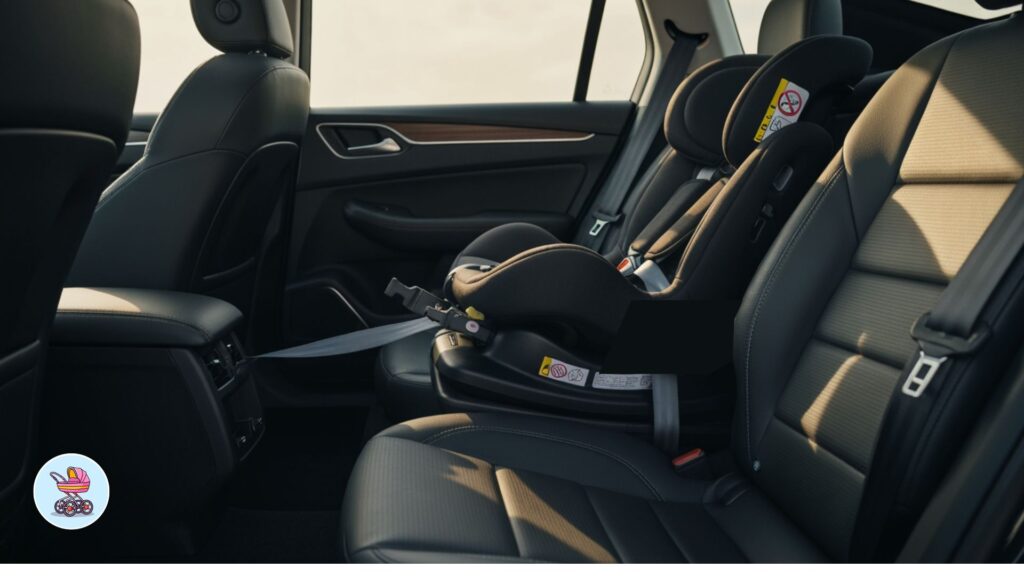
LATCH anchor borrowing is a common topic among parents who want a safe and flexible way to install a car seat in the center position. In many vehicles, the LATCH system car seat is designed for side positions, but some parents consider using inner anchors from both sides.
This practice is known as borrowing LATCH anchors, and it often raises safety questions. While it may seem convenient, it is not always approved by manufacturers. Understanding car seat installation safety, vehicle owner manual instructions, and proper anchor spacing standard vs non-standard is essential before attempting it. When used correctly, the system can support a secure fit, but incorrect use may lead to improper car seat installation risks during a crash situation.
Table of Contents
What Is the LATCH System? (Beginner Basics)
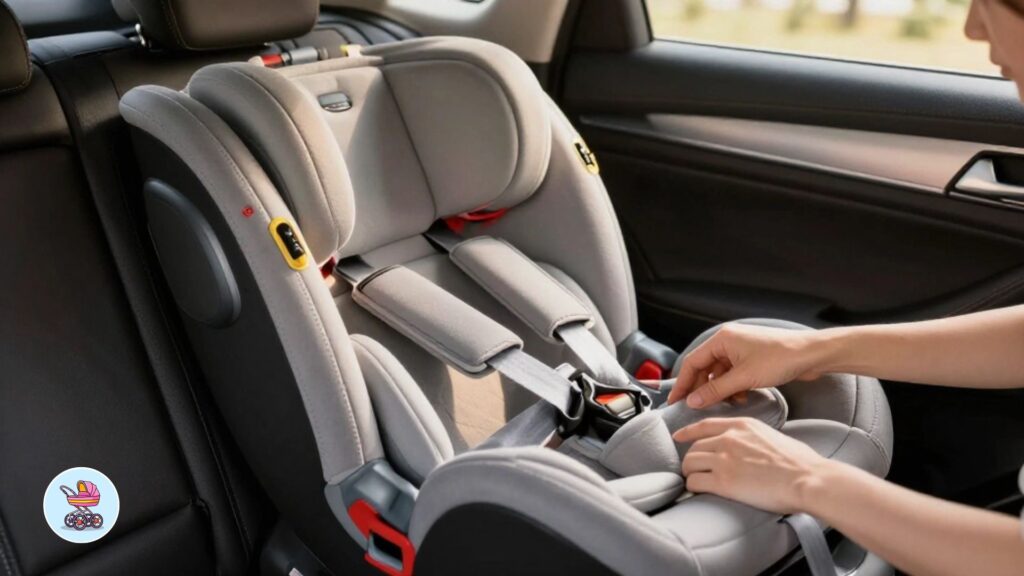
Understanding the system first will save you from costly mistakes later. The LATCH (Lower Anchors and Tethers for Children) system is part of every modern child seat anchor system in the USA. It was introduced to make car seat safety installation easier and more consistent for parents.
Instead of relying only on seat belts, this system uses lower anchors car seat points and a top tether anchor to secure the seat firmly. Many parents prefer it because it feels easier. However, experts like a child passenger safety technician (CPST) always stress one thing — always check both manuals before installation.
Lower Anchors and Tethers for Children (LATCH) Explained
Let’s simplify it. The LATCH system has two main parts. First are the lower anchor connectors, which attach to metal bars hidden in your vehicle seat. Second is the tether strap, which connects to a tether anchor location vehicle behind the seat.
These anchors follow strict car seat anchor spacing rules, usually 11 inch anchor spacing. This spacing ensures proper crash force distribution during an accident. That’s also why borrowing LATCH anchors can become risky when spacing changes.
How LATCH Anchors Work in Your Vehicle
Now imagine your back seat. Most cars have outboard seating position LATCH setups, meaning anchors are only on the sides. The center often lacks dedicated LATCH anchors, which leads parents to try center LATCH anchors using nearby anchors.
Here’s the problem. When you move away from anchor spacing standard vs non-standard, the forces during a crash change direction. That affects anchor load capacity and safety. Always locate LATCH anchors properly using your vehicle owner manual instructions before installing anything.
Weight Limits and Safety Rules
This is where many parents slip up. Every LATCH system car seat has limits. These are called car seat weight limits LATCH, and once your child grows, you must switch to seat belt installation.
Below is a simple table to understand:
| Factor | LATCH System | Seat Belt |
|---|---|---|
| Weight Limit | Capped at 65 lbs combined (child + car seat weight, per NHTSA) | No combined weight cap |
| Ease of Use | Easy | Moderate |
| Safety | Equal if used correctly | Equal if used correctly |
Experts say the key is a secure car seat installation. That means following the one inch movement rule. If your seat moves more than one inch, it’s not safe. Always achieve tight installation and follow manufacturer instructions.
What Is LATCH Anchor Borrowing?
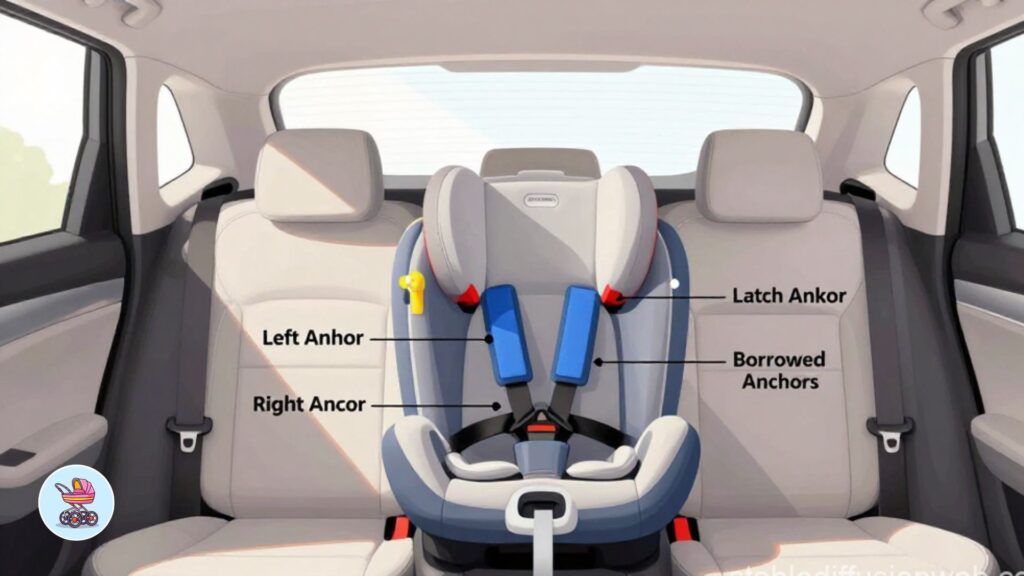
Many parents get curious when they don’t see anchors in the middle seat. That’s when LATCH anchor borrowing comes into play. In simple terms, it means using inner anchors from side seats to install a car seat in the center. Sounds smart, right? Not always.
The truth is, borrowing LATCH anchors changes how your car seat behaves in a crash. It can affect crash force distribution and reduce stability. According to car seat manufacturer guidelines, you should only do this when both manuals clearly allow it. Always check both manuals before trying this method.
Definition of LATCH Anchor Borrowing
Let’s break it down clearly. LATCH anchor borrowing means using one anchor from each side seat to create a center installation. This setup usually creates non-standard LATCH spacing, which goes beyond the normal 11 inch anchor spacing.
Because of this wider gap, the seat may face unusual stress during impact. That affects anchor load capacity and safety. This is why experts warn about improper car seat installation risks when using this method without approval.
Why Parents Consider Using Center LATCH
Parents naturally want the safest spot. Studies show the middle is often the safest seating position for child because it is far from side impacts. That’s why many try center seat car seat installation using center LATCH anchors.
Another reason is convenience. The LATCH system car seat feels easier than belts. But here’s the catch. Ease does not always mean safe. A poorly installed seat in the center is riskier than a correctly installed one on the side. Experts always recommend secure car seat installation over location.
Difference Between Dedicated vs Borrowed Anchors
This is where things get important. Dedicated LATCH anchors are designed and tested for a specific seating position. They follow exact car seat anchor spacing rules to handle crash forces safely.
On the other hand, borrowed anchors create anchor spacing standard vs non-standard issues. This can change the installation angle and force during a crash. That’s why car seat safety guidelines strongly recommend using only approved setups.
Can You Use LATCH Anchors in the Center Seat?
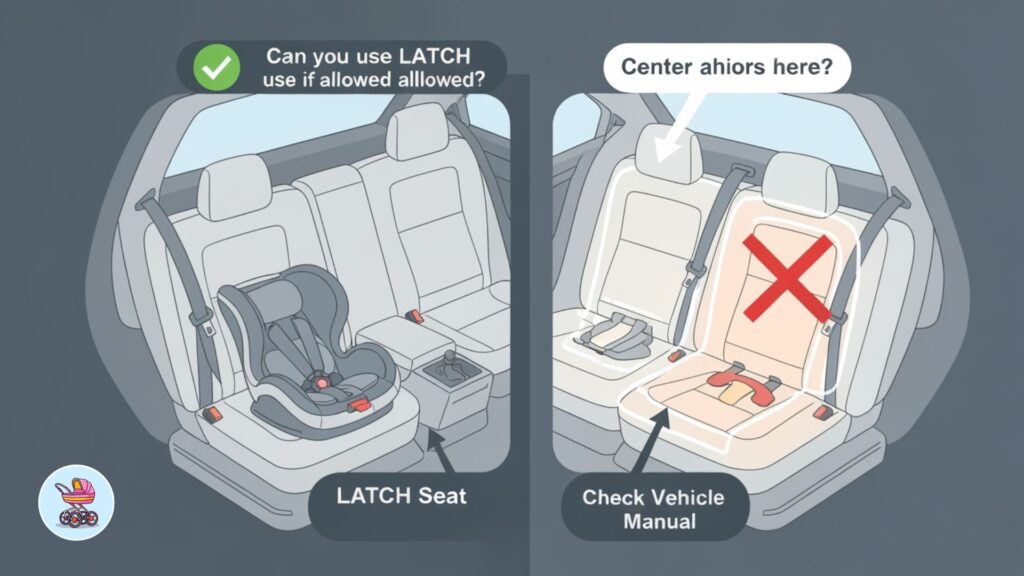
This is the question every parent asks. So, can you use LATCH in center seat? The answer is not simple. Some vehicles allow it, but most do not. That’s why understanding LATCH anchor borrowing rules is critical.
Many modern vehicles in the USA only provide outboard seating position LATCH. That means the center seat requires seat belt car seat installation instead. If you ignore this, you increase improper car seat installation risks. Always rely on vehicle owner manual instructions.
The Truth About Center Seating Position
The center seat is often called the safest. That’s true for rear seat car seat placement. But safety also depends on installation quality. If you cannot achieve tight installation, the center seat loses its advantage.
A properly installed seat on the side using lower anchors car seat can be safer than a loose center setup. This is why experts focus on car seat center vs side safety based on correct installation, not just position.
When Borrowing Anchors Is Allowed (Manufacturer Rules)
There are rare cases where LATCH anchor borrowing is allowed. But there’s a strict rule. Both the vehicle owner manual and car seat manual must approve it. If one says no, the answer is no.
Also, the spacing must still meet LATCH anchor spacing requirements or be tested for wider setups. You must ensure no interference with belts and still follow the one inch movement rule. Always follow manufacturer instructions carefully.
When It Is NOT Allowed (Most Vehicles)
Here’s the reality. In most cars, borrowing LATCH anchors is not allowed. The main reason is non-standard LATCH spacing, which can exceed safe limits.
For example, many SUVs and sedans only support two seats using LATCH. Trying to install a third using borrowed anchors can overload the system. This affects seat belt strength vs LATCH balance and increases risk. In such cases, experts recommend you switch to seat belt installation instead.
Is LATCH Anchor Borrowing Safe?
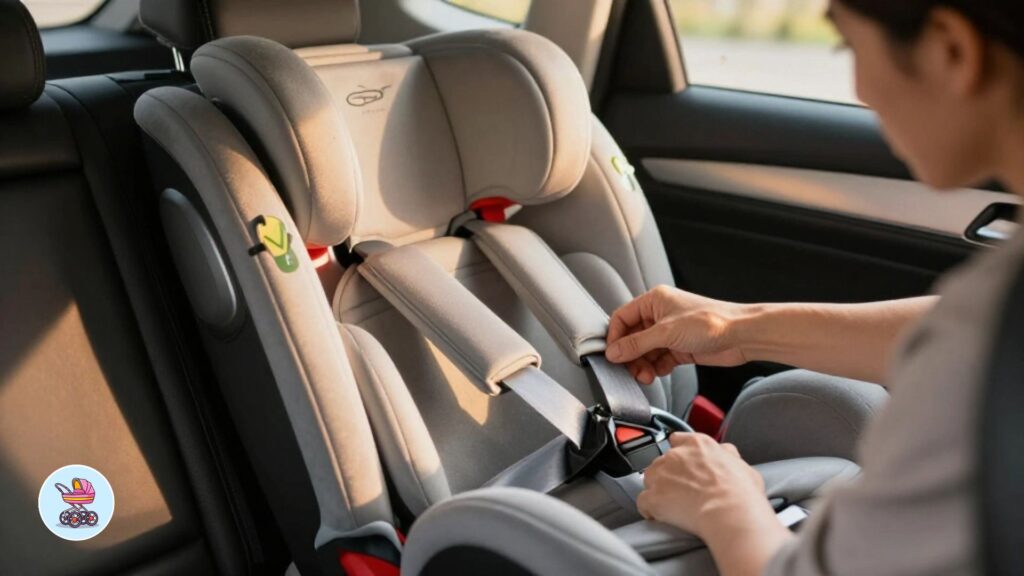
Let’s get straight to the point. Many parents ask, is LATCH anchor borrowing safe? The honest answer is — only in rare cases. Most of the time, it is not recommended because it changes how your car seat handles impact forces.
When you use LATCH anchor borrowing, you move away from tested conditions. This affects crash force distribution and may weaken the system during a collision. According to car seat safety guidelines, a correct installation matters more than location. Always aim for a secure car seat installation.
Safety Risks You Need to Know
Here’s where things get serious. Using borrowing LATCH anchors without approval can create hidden dangers. The biggest issue is non-standard LATCH spacing, which changes how the seat reacts in a crash.
This can lead to uneven pressure on lower anchor connectors and reduce anchor load capacity. Experts warn about improper car seat installation risks when anchors are spaced wider than recommended. Even if the seat feels tight, it may not perform well in a crash.
Crash Test Insights & Expert Recommendations
Crash testing plays a huge role in safety. Most seats are tested using standard 11 inch anchor spacing. When you change this, the results are unpredictable. That’s why many brands don’t approve center LATCH anchors using borrowed anchors.
A child passenger safety technician (CPST) will always tell you to follow tested methods. They emphasize reading vehicle owner manual instructions and car seat manufacturer guidelines carefully. If a setup is not tested, it’s not worth the risk.
Why Incorrect Use Can Be Dangerous
Let’s make this simple. A car seat protects your child by managing energy during a crash. If installed incorrectly, the installation angle and force changes. That can increase movement and reduce protection.
Failure to achieve tight installation or follow the one inch movement rule can lead to serious injury. This is why experts say to avoid common installation mistakes and never assume that tighter always means safer.
LATCH vs Seat Belt: Which Is Safer?
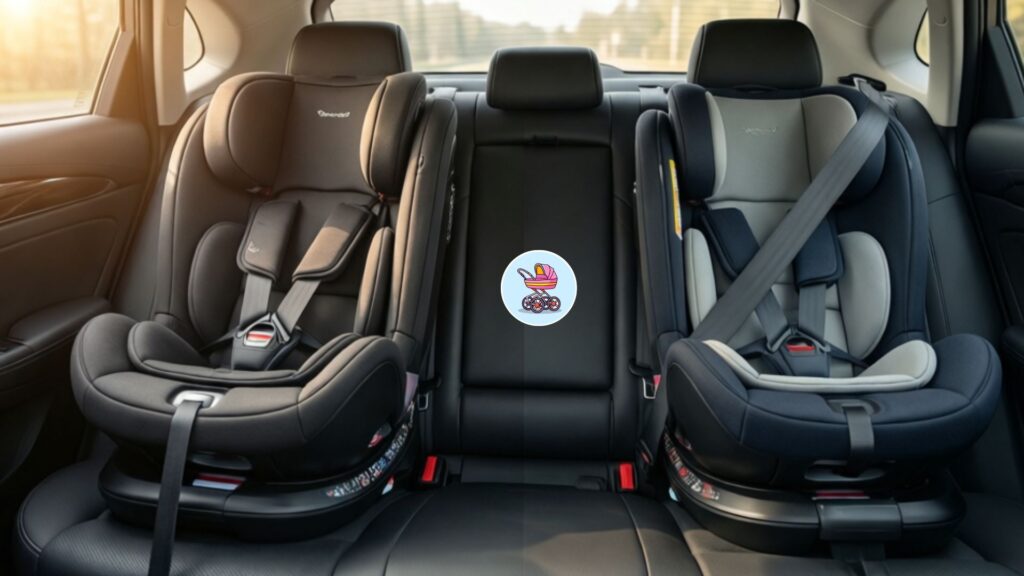
Now comes another common question. Parents often debate LATCH vs seat belt safety. The truth might surprise you. Both methods are equally safe when used correctly.
The real difference is not safety, but proper use. Whether you choose LATCH system car seat or seat belt car seat installation, the goal is always a secure car seat installation. Let’s break it down clearly.
LATCH vs Seat Belt Comparison
Here’s a simple comparison to help you understand:
| Feature | LATCH System | Seat Belt |
| Ease of Use | Easier for beginners | Requires practice |
| Weight Limits | Limited (car seat weight limits LATCH) | Higher capacity |
| Availability | Not in all seats | Available everywhere |
| Safety | Equal if used right | Equal if used right |
The key point is this. Seat belt strength vs LATCH is not about better or worse. It’s about correct installation. Both follow strict crash testing standards.
When to Use Seat Belt Instead of LATCH
There are clear situations where belts are better. If your child exceeds car seat weight limits LATCH, you must switch to seat belt installation. Also, if your vehicle lacks dedicated LATCH anchors in the center, belts are the only safe option.
Many parents prefer belts for center seat car seat installation because they work in all positions. Just make sure you attach and tighten connectors properly and follow all car seat safety installation steps.
Common Misconceptions About Safety
Let’s clear a big myth. Many parents believe LATCH is always safer. That’s not true. Both methods are equally effective when used properly.
Another myth is that using both together increases safety. In reality, it can cause problems with crash force distribution. Experts strongly advise to follow manufacturer instructions and avoid mixing methods unless approved.
Can You Use LATCH and Seat Belt Together?
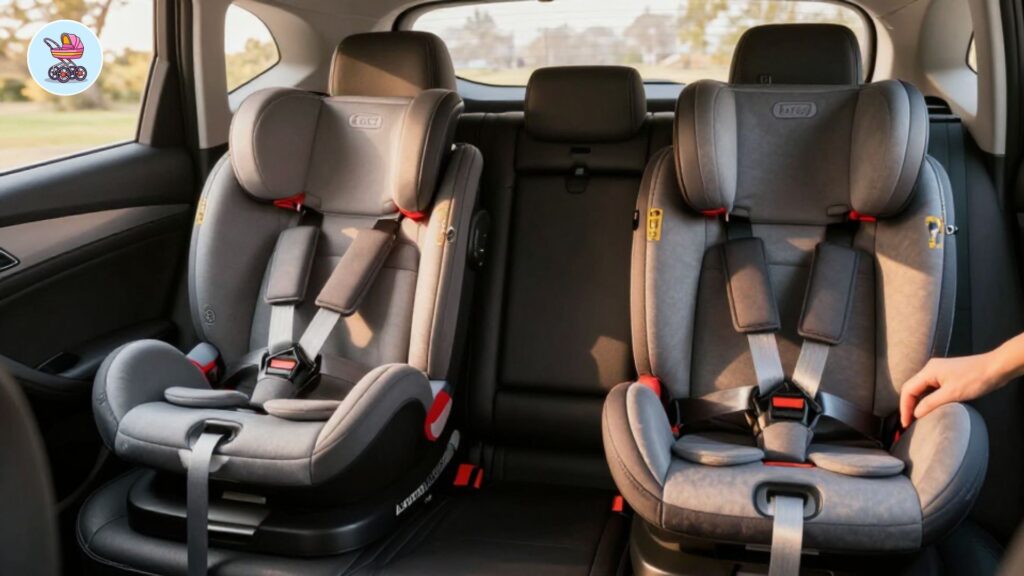
It might sound like a smart idea. Many parents think using both systems will double safety. But in reality, combining them can do the opposite. Using both methods without approval can confuse how the seat handles crash energy.
Experts clearly state that you should not mix systems unless allowed. This applies to LATCH anchor borrowing as well. Mixing methods can affect crash force distribution and reduce stability. Always aim for a secure car seat installation by choosing one method and doing it right.
Why Using Both Together Is Unsafe
Let’s break it down simply. Car seats are tested using one system at a time. When you combine both, the seat reacts differently under pressure. This affects installation angle and force and may cause weak points during impact.
It can also give a false sense of security. The seat may feel tight but fail the one inch movement rule during a crash. Experts warn about improper car seat installation risks when parents try to over-secure seats using both methods.
Manufacturer Guidelines Explained
Most brands clearly explain this in their manuals. According to car seat manufacturer guidelines, you must choose either LATCH or seat belt. Rare exceptions exist, but they are clearly mentioned.
That’s why it’s important to check both manuals before installing. Follow vehicle owner manual instructions and always follow manufacturer instructions step by step. If unsure, consult a child passenger safety technician (CPST) for help.
How to Properly Install a Car Seat Using LATCH
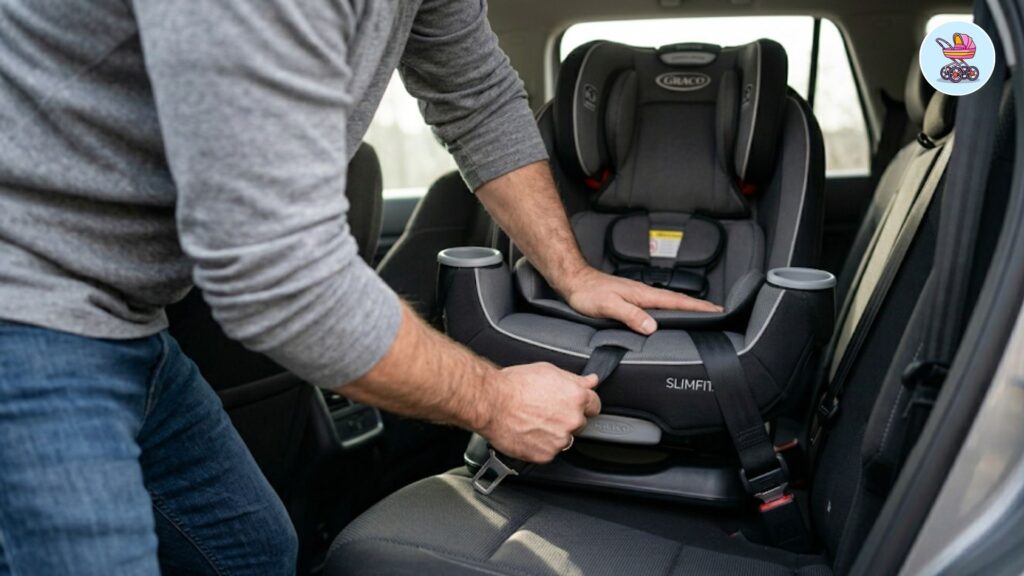
Installing a car seat correctly is more important than choosing location. Even the safest seat can fail if installed poorly. Whether you’re avoiding LATCH anchor borrowing or using standard anchors, correct steps matter.
A proper car seat safety installation ensures your child stays protected. The goal is simple. You want a tight, stable seat with minimal movement. Let’s walk through the process clearly so you can do it with confidence.
Step-by-Step Installation Guide
1. Check Your Car Manual
Start here every time. Open your vehicle owner manual and your car seat manual. These guides tell you where to install and what methods are allowed. Always check both manuals before using center LATCH anchors or any setup.
2. Locate Lower Anchors
Next, find the anchors. Look between the seat cushions to locate LATCH anchors. These metal bars are part of your child seat anchor system. Also identify the tether anchor location vehicle for the top strap.
3. Attach Connectors Correctly
Now connect the seat. Use the lower anchor connectors to attach the car seat securely. Make sure the straps are flat and not twisted. Carefully attach and tighten connectors to remove slack.
4. Tighten the Straps
Push down on the seat while tightening. This helps you achieve tight installation. The seat should not shift easily. Proper tightening ensures better crash force distribution during an accident.
5. Use the Top Tether (Important!)
If you’re installing a forward-facing car seat, always use top tether for forward-facing setups. This step reduces forward movement and improves safety. Never skip this important connection.
6. Check for Movement (1-inch rule)
Finally, test your work. Grab the seat near the belt path and move it. It should not move more than one inch. This is called the one inch movement rule and it ensures a secure car seat installation.
Common Mistakes to Avoid with LATCH Anchors
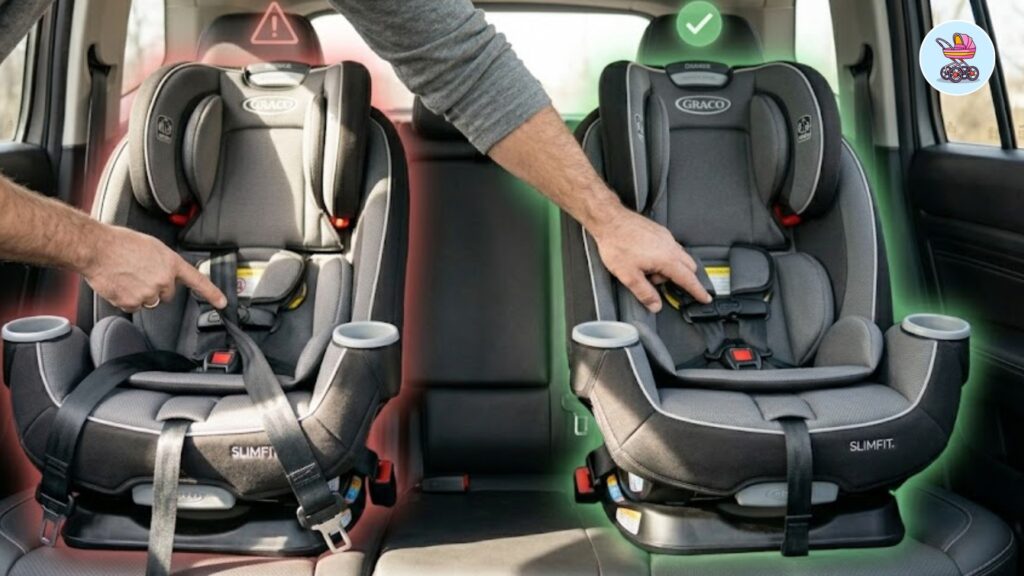
Mistakes happen more often than you think. Even careful parents sometimes misuse the LATCH system car seat without realizing it. These small errors can increase improper car seat installation risks and reduce protection during a crash.
The good news is that most mistakes are easy to fix. Once you understand the basics of car seat safety installation, you can avoid them completely. Always focus on correct use rather than convenience and follow trusted car seat safety guidelines.
Borrowing Anchors Without Approval
This is one of the most common issues. Many parents assume they can use LATCH anchor borrowing in the center seat without checking rules. But using borrowing LATCH anchors without permission can create unsafe conditions.
It often leads to non-standard LATCH spacing, which changes crash force distribution. Experts strongly advise to check both manuals before attempting this. If not clearly allowed, avoid it completely.
Ignoring Weight Limits
Another frequent mistake is ignoring car seat weight limits LATCH. As your child grows, the anchors may no longer handle the load safely. This affects anchor load capacity and increases risk during impact.
When limits are reached, you must switch to seat belt installation. Many parents delay this step, which can compromise safety. Always follow car seat manufacturer guidelines for weight transitions.
Incorrect Anchor Spacing
Spacing matters more than most people think. Standard setups follow 11 inch anchor spacing, which ensures proper safety performance. When spacing changes, you enter anchor spacing standard vs non-standard territory.
This affects installation angle and force during a crash. That’s why car seat anchor spacing rules are strict. Using anchors too far apart can weaken the entire system.
Installing Multiple Seats on One Anchor Set
This mistake can be dangerous. Each anchor set is designed for one seat only. Attaching more than one seat can overload the system and reduce stability.
It also affects seat belt strength vs LATCH balance in the vehicle. Experts warn to always avoid common installation mistakes and use one anchor set per seat. This ensures a proper secure car seat installation.
What Do Car Seat & Vehicle Manufacturers Say?
If you ever feel confused, trust the manuals. Both your vehicle and car seat guides are written using strict crash testing standards. These rules are not suggestions. They are safety requirements.
Manufacturers design systems based on specific testing conditions. That’s why following instructions is critical. Ignoring them can increase improper car seat installation risks and reduce protection for your child.
Why You Must Follow Both Manuals
Here’s the golden rule. Always follow both the vehicle owner manual and the car seat manual. These documents explain exactly how to install your seat safely.
Experts emphasize this because every car is different. Some allow center LATCH anchors, while others do not. Always follow manufacturer instructions and double-check compatibility before installation.
Examples of Vehicles That Allow Center LATCH
Federal rules only require two rear seating positions to have dedicated lower anchors, so most vehicles skip the center. But a handful of models build in a workaround.
The 2017–2022 Honda CR-V has one dedicated center lower anchor that pairs with either the inboard driver-side or passenger-side anchor, giving you a center install — though the seat sits slightly off-center rather than dead-center. Several minivans, including the Chrysler Pacifica, Town & Country, and Dodge Grand Caravan, offer a similar setup in some model years, but the anchors usually overlap into the adjacent seating position, so installing a seat in the center effectively uses up two seats.
None of this is universal, and it changes by model year even within the same nameplate. Always confirm your exact configuration in your vehicle owner’s manual before assuming your car supports it.
Car Seats That Support Anchor Borrowing
A few car seats are tested for non-standard LATCH spacing. These models may allow borrowing LATCH anchors under certain conditions. But this is rare and clearly mentioned in the manual.
Even in these cases, you must ensure proper spacing and no interference with belts. Always aim to achieve tight installation and maintain correct positioning for maximum safety.
If you’re shopping for a seat that’s easier to install correctly the first time, models like the Evenflo Revolve 360 and the Graco SlimFit3 LX are built with more forgiving LATCH access, which cuts down on exactly the kind of guesswork that leads to borrowing anchors in the first place. For families on a tighter budget, the Best Affordable Car Seat and Stroller guide covers options that don’t sacrifice installation ease.
Manufacturer Rules: Why They Matter More Than You Think

Every car seat works differently, and that’s why car seat manufacturer guidelines are non-negotiable. Many parents skip the manual, but that’s exactly where safety mistakes begin. Whether you’re using LATCH vs seat belt, the final authority is always the brand instructions.
Always Follow the Vehicle + Car Seat Manual
Your car seat manual and vehicle manual work together like a safety map. One tells you how the seat is built, and the other tells you how your car supports it. Ignoring either can lead to improper car seat installation risks, even if the seat feels tight.
For example, some SUVs allow center seat car seat installation, but only with seat belts—not LATCH. That’s why reading both manuals is critical before every setup.
If you’re exploring different systems for growing kids, check comparisons like Rotating Car Seats or detailed guides such as Rear Facing to 50 Pounds.
Real-World Scenarios: When LATCH or Seat Belt Works Best
In real life, no single method fits every situation. Parents often switch between systems depending on car type, child size, and seating position.
Small Cars vs SUVs
In compact cars, LATCH anchor borrowing: is it safe to use center LATCH anchors becomes a common question. The answer usually depends on spacing rules and approval. In SUVs, seat belts often win because they allow more flexible positioning.
If you travel often, lightweight gear matters too. You can explore options like Best Lightweight Travel Stroller or compact systems like UPPAbaby MINU V3 for easier mobility.
Growing Kids and Changing Needs
As your child grows, car seat weight limits LATCH become a major factor. That’s when parents switch to seat belts for forward-facing seats. For toddlers, safety transitions are easier with structured systems like 3 Year Old Booster Seat Guide.
Troubleshooting Installation Problems
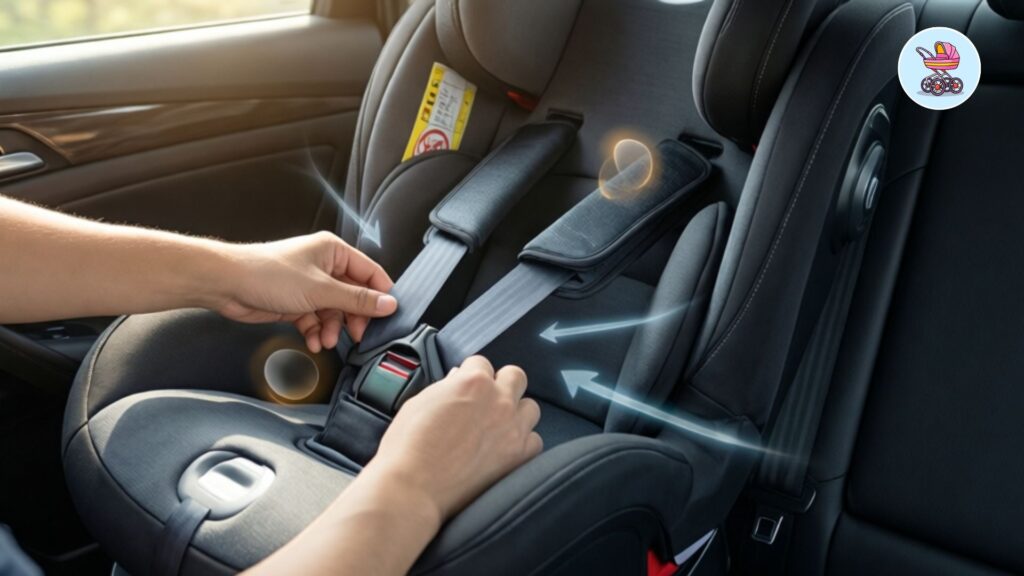
Even experienced parents face installation issues. The good news? Most problems are easy to fix once you understand the cause.
Seat Still Moves Too Much
If your seat moves more than one inch, the issue is usually loose straps or incorrect angle. Re-tighten the attach and tighten connectors step and apply pressure on the seat while pulling.
For compact setups in tight cars, slim designs like Graco SlimFit3 LX Review or Britax One4Life Slim ClickTight help reduce movement issues.
Confusion with Anchor Locations
Many parents struggle to locate LATCH anchors in car seat crease. They are often hidden deep between cushions. Always check both sides carefully before installation.
If you’re unsure about compatibility, comparing systems like Graco SlimFit vs SlimFit LX can help you choose easier setups.
Safety Upgrades and Advanced Features
Modern car seats come with advanced safety features that improve protection beyond LATCH or seat belts.
Anti-Rebound and Load Leg Systems
Features like anti rebound bar car seat and load legs reduce movement during crashes. These technologies stabilize the seat and improve crash force distribution significantly.
You can explore advanced safety designs in reviews like Evenflo Revolve 360 Extend or Britax Poplar Review.
Flame Retardant-Free Materials
Some parents prefer chemical-free options. Seats labeled flame retardant free car seat reduce exposure to certain materials while maintaining safety standards.
Accessories That Improve Installation and Safety
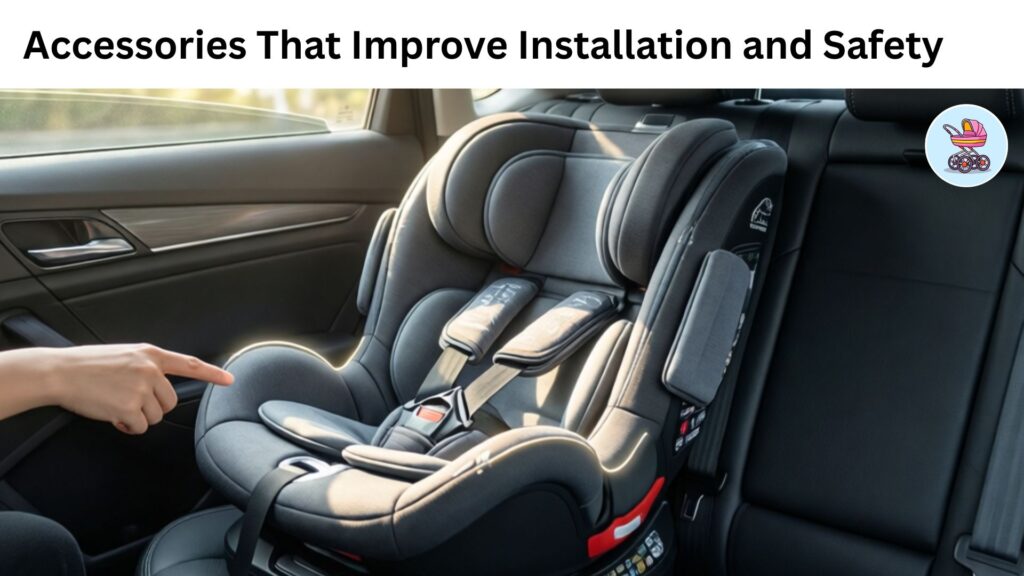
Small accessories can make installation easier and travel more comfortable.
Helpful Add-Ons for Parents
A stroller organizer travel setup keeps essentials within reach, especially during quick transitions from car to stroller. You can also add a cup holder for stroller or stroller baby tray for convenience.
Check practical accessories like:
- Best Stroller Organizer for Travel
- Cup Holder for Stroller
- Baby Stroller Hooks
- Stroller Rain Cover
- Travel Stroller Bags
These tools indirectly improve safety by making handling smoother and reducing rushed installation mistakes.
Smart Buying Choices for Safer Travel Systems
Choosing the right setup makes installation easier from day one. A good travel system reduces confusion between car seats and strollers.
Best Combined Systems
Parents often prefer all-in-one setups like:
- Evenflo Pivot Modular Travel System
- Chicco Bravo Trio Travel System
- Graco Modes Pramette Travel System
- Baby Trend EZ Ride 35 Travel System
These systems reduce installation errors because compatibility is already built-in.
For budget-friendly options, visit Best Affordable Car Seat and Stroller.
Final Safety Checklist Before Every Ride
Before driving, take 30 seconds to double-check everything:
- Seat is tight (less than 1 inch movement)
- Correct system used (LATCH or seat belt—not both)
- Weight limits not exceeded
- Top tether attached (if forward-facing)
- Manual instructions followed
If you want to stay fully informed, explore more guides like Lower Anchor Car Seat or check tools like the Baby Eye Color Calculator for fun planning alongside parenting prep.
(FAQ) LATCH anchor borrowing
What is center LATCH borrowing?
It means using the inner LATCH anchors from the left and right seats to install a car seat in the center position. It is only safe if both the car and car seat manuals allow it.
Can you share LATCH anchors?
No, each LATCH anchor set is designed for one car seat only and should not be shared between seats.
What is a LATCH anchor?
It is a built-in metal attachment point in your car used to securely install a child car seat without using a seat belt.
What is safer, a LATCH or a seatbelt?
Neither is safer—both are equally safe when the car seat is installed correctly.
What is the weight limit for the LATCH anchor?
NHTSA caps the lower anchors at 65 lbs combined — that’s the car seat’s weight plus your child’s weight added together, not 65 lbs of child alone. So if your car seat weighs 25 lbs, your child hits the limit at 40 lbs. Once you’re there, switch to a seat belt installation. Always confirm the exact number on your car seat’s label, since some manufacturers set it lower.
Are anchors better than seat belts?
Anchors are easier to use, but seat belts are just as safe and often have higher weight limits.
Can I use both the LATCH and the seat belt?
No, in most cases you should use only one system unless the manufacturer specifically allows both.
What is another name for anchor fastener?
It is commonly called a LATCH connector or ISOFIX connector.
Are LATCH and ISOFIX the same?
They solve the same problem but aren’t identical. LATCH mostly uses flexible straps with hook connectors, while ISOFIX (used mainly in Europe) uses rigid connectors that click straight into the anchors. A car seat built for one system usually can’t be swapped directly into a vehicle built for the other without an adapter.
Which is better, an ISOFIX or a seat belt?
Both are equally safe when installed correctly; ISOFIX is usually easier to install.
What is the full form of ISOFIX?
ISOFIX stands for “International Standards Organisation FIX”.
Do all cars have anchors for car seats?
Most modern cars do, but older models may not, so always check your vehicle manual.
How far apart are LATCH anchors supposed to be?
Standard spacing is 11 inches between the two lower anchors. When installers “borrow” anchors from two different seating positions, that spacing usually ends up wider than 11 inches, which is why it isn’t automatically approved.
Conclusion: What Really Keeps Your Child Safe

At the end of the day, safety doesn’t come from LATCH alone or seat belts alone. It comes from correct installation, proper understanding, and consistent checking.
Whether you choose advanced systems like rotating seats, compact travel strollers, or full travel systems, the rule stays the same: install it right every time.
Because in child safety, precision always wins over assumption.
This guide was put together by Saim Mughal, founder of Care for Cuties. Every product recommendation and installation tip on this site comes from real hands-on testing and constant tracking of the latest car seat and stroller safety standards, so parents get answers they can actually trust — not recycled advice.
Saim Mughal is the founder of Care for Cuties, testing and comparing baby gear firsthand so parents get advice they can trust, not recycled claims.
6 Responses