This post contains affiliate links. If you purchase through our links, we may earn a small commission at no extra cost to you.
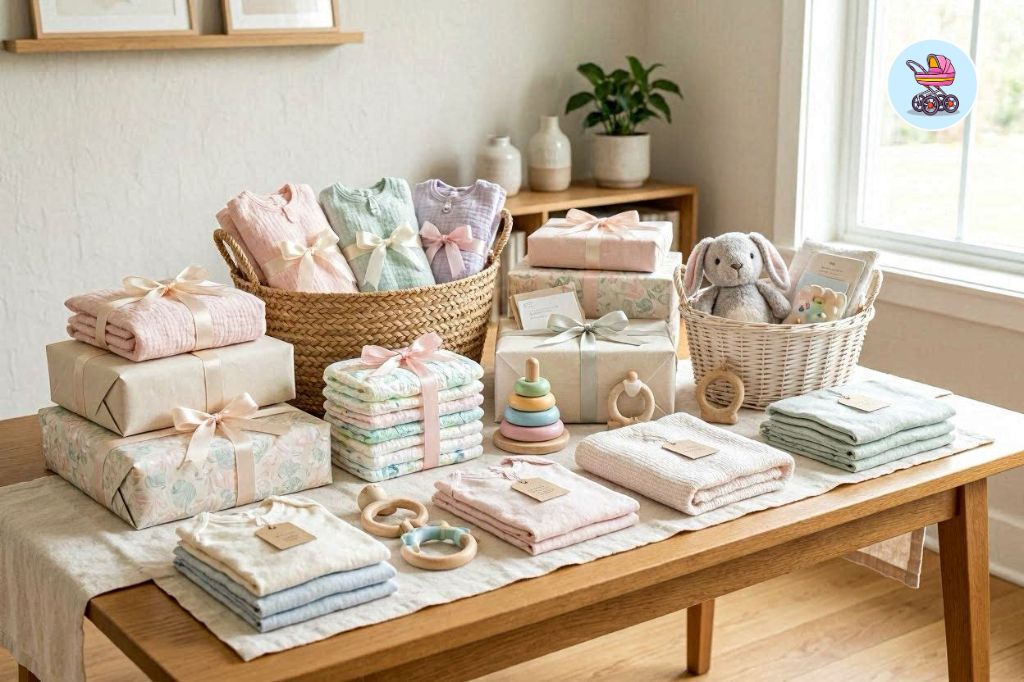
You got the invite. Now you’re staring at the registry wondering: is $30 too cheap? Is $80 too much? Nobody wants to look stingy — but nobody wants to overspend either. Here’s the honest breakdown by relationship, situation, and budget so you can shop with zero second-guessing.
Table of Contents
How Much to Spend on a Baby Shower Gift — The Short Answer
Most people spend between $30 and $150, depending on how close they are to the parents-to-be. There’s no universal “right” number.
What matters most is your relationship and your budget — not the venue, not the registry price tags, and definitely not what anyone else brings.
As certified etiquette coach Jamila Musayeva puts it: “Kindness and generosity are not measured in currency. A small, well-chosen gift is much more meaningful than something extravagant that feels forced.”
Baby Shower Gift Spending by Relationship — Your Cheat Sheet
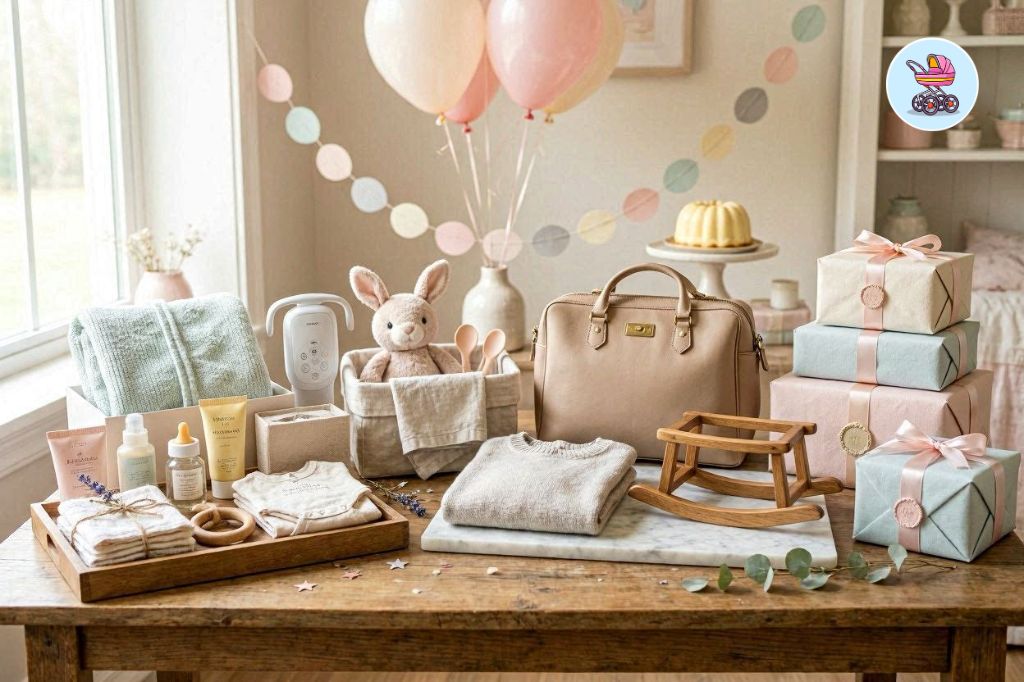
Your relationship with the parents is the single biggest factor. Use this table as your starting point.
Quick-Reference Spending Table
| Relationship | Suggested Range | Gift Ideas |
| Acquaintance / Coworker | $20–$40 | Swaddle set, baby book, wipes bundle |
| Friend / Extended Family | $50–$100 | Registry item, bath set, gift card |
| Close Friend / Sibling | $75–$150 | Big registry item, group gift |
| Grandparent / Immediate Family | $100–$300+ | Stroller, crib, experience fund |
Survey data backs this up. In a Google survey of 1,000 US women, nearly 67% said $10–$30 was appropriate for a coworker, while just over half said $50–$100 was right for a close friend or family member.
Real parent moment: “When my sister had her first baby, I spent $85 on a diaper bag from her registry. When my coworker had hers, I contributed $20 to a group gift — and nobody batted an eye. Context is everything.” — Sarah Mitchell, careforcuties.com
The 5 Factors That Actually Determine Your Budget
1. Your Relationship With the Parents
The closer you are, the more you typically spend. That’s it. A coworker you wave to in the hall is not the same as your best friend of 15 years.
Don’t overthink it. Ask yourself: Would I call this person on a bad day? If yes, lean toward the higher end of your tier.
2. Your Own Financial Situation
Baby showers don’t follow a “cover your plate” rule — that’s a wedding thing. You are never expected to match the cost of a catered meal with your gift.
A helpful framework: aim for roughly 1.5% of your monthly income across all annual gift-giving occasions. If you bring home $3,000/month, that’s about $45/month spread across birthdays, holidays, and showers combined — not $45 per event. See EarnIn’s budget guide for a fuller breakdown.
Never stretch your budget to match what others give. A genuine $25 gift beats a resentful $80 one.
3. The Type of Shower
A backyard potluck and a catered country club luncheon carry slightly different social contexts. Neither obligates you to spend above your means.
Virtual showers? Expectations are typically lower. Shipping costs already count as part of your effort.
4. First Baby vs. Second Baby — The Sprinkle Rule
Second baby showers (often called “sprinkles”) are smaller by design. The parents already have a crib, stroller, and most of the gear.
Drop one tier for a second baby shower. A close friend who’d normally get a $75–$100 gift? A $40–$60 practical item is completely appropriate. Consumables — diapers, wipes, formula, baby food pouches — are the perfect sprinkle gift. They’ll always get used.
5. Whether You’re Attending or Not
Skipping the shower doesn’t mean you skip the gift — but it does mean you can spend less.
Drop one relationship tier if you’re not attending. A close friend who’d normally get $75–$100 from you? $40–$60 is perfectly fine when you can’t make it. Send the gift before the shower or deliver it personally after. A personal visit means more than the dollar amount.
Group Gifts — The Smartest Move for Coworkers
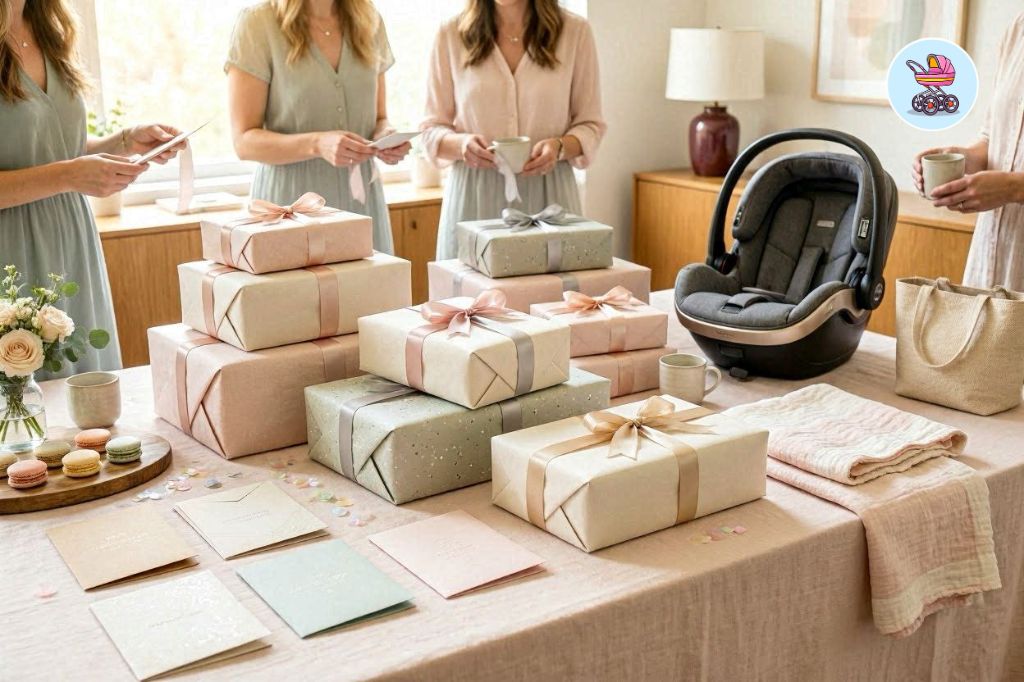
Five people putting in $20 each becomes a $100 registry item. That’s a baby monitor, a diaper bag, or a full bath set — something the parents actually want, without anyone feeling the pinch.
How to organize it without the drama:
- Suggest a range (“$15–$25, whatever works for you”)
- Set a clear deadline — one week max
- Send one reminder, not three
- Don’t audit contributions or make anyone feel judged
Real parent moment: “At my last job, we all threw in $15 each for a baby shower. The mom got a $120 sound machine she had on her registry. She cried when she opened it. Nobody cared that we didn’t each spend $50.”
If you’re planning the party too, check out these best baby shower themes for 2025 to make the whole event feel put-together.
Registry Tips That Save You Money Without Looking Cheap
This is what most articles skip: you can buy registry items for less than the listed price.
Both Amazon and Target offer completion discounts — typically 10–15% off remaining registry items after the shower date. If you shop a week or two early, you can sometimes get those same items on sale during normal promotions.
3 registry hacks worth using:
- Check Amazon’s universal registry search. Many parents add items from multiple stores. The same item is often cheaper on Amazon than on the original retailer’s site.
- Buy 1–2 months before the shower. Price drops and sale events are more common than you think.
- Bundle smaller items. Two $15 items feel more intentional than one $15 item — and hits your budget naturally.
One more tip: size up on baby clothes. Everyone buys newborn. Nobody buys 3–6 month. Go bigger — it’ll actually get used.
Want to make the party itself just as memorable? These fun baby shower games to print and play are a crowd-pleaser.
Is a Gift Card OK for a Baby Shower?
Yes — and many parents quietly prefer them.
A gift card means no duplicates, no wrong sizes, and the freedom to buy exactly what they need when they need it. That’s genuinely useful when you’re a sleep-deprived new parent.
Best gift card options for baby showers:
- Amazon (most flexible)
- Target (registry-friendly)
- Buy Buy Baby (baby-specific)
- Walmart (budget-friendly essentials)
If you’re worried it feels impersonal, dress it up. Add a nice card, a small treat for mom (a fancy tea, a chocolate bar), or a tiny baby item alongside it. The presentation is where you add the personal touch — not the dollar amount.
Cash vs. gift card: Cash is fine if you know the parents well. Gift cards feel slightly more intentional and are widely accepted at any shower.
What to Spend if You Can’t Attend
Not attending doesn’t mean no gift — especially for close friends or family. But spending less is expected and accepted.
The rule: Drop one relationship tier.
- Close friend (normally $75–$150) → send $40–$60
- Extended family (normally $50–$100) → send $30–$50
- Coworker (normally $20–$40) → a card is genuinely fine
Send the gift before the shower so it’s there when everyone else’s gifts are opened. Or deliver it in person after — that personal visit matters far more than the price tag.
Recommended Products
The Honest Company Baby Shower Gift Set
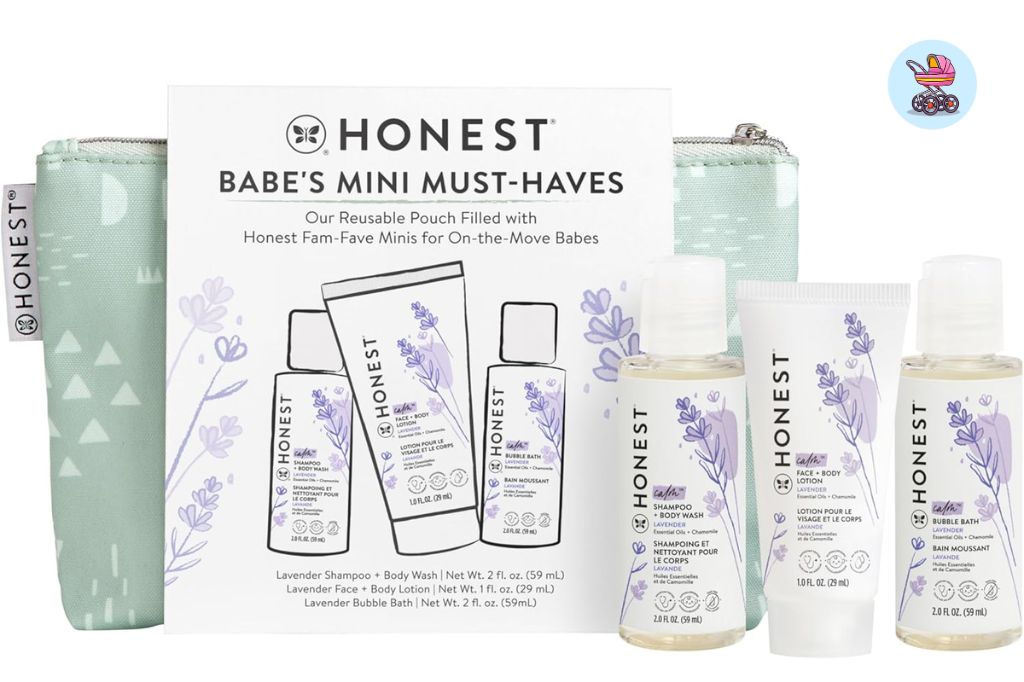
This is the gift that works for almost any relationship tier. It’s practical, well-loved by US parents, and comes in under $40 — making it a smart pick for coworkers, acquaintances, or anyone on a tighter budget. The natural formulas are a bonus that shows real thought.
⭐ Best For: Coworkers, acquaintances, group gift add-on
KEY SPECS:
- Product type: Baby care bundle (shampoo, lotion, wipes)
- Size: Varies by set
- Price range: $25–$45
- Available on Amazon: Yes
PROS: ✅ Well-known brand parents trust ✅ Natural, plant-based formulas ✅ Comes gift-ready — no extra wrapping needed
CONS: ❌ Some parents have product preferences already ❌ Smaller sets feel thin without a card
Skip Hop Forma Diaper Bag Backpack
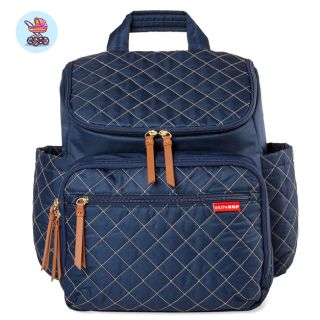
The Skip Hop Forma is one of the most consistently requested registry items for a reason. It fits everything, looks good doing it, and holds up through the newborn chaos. This is your go-to for a close friend or sibling who wants something they’ll use every single day.
⭐ Best For: Close friends, siblings, anyone buying from the registry
KEY SPECS:
- Product type: Diaper bag backpack
- Size: 17.5″ H x 12″ W x 6″ D
- Price range: $70–$90
- Available on Amazon: Yes
PROS: ✅ Huge capacity with smart organization ✅ Wipeable lining — practical for new parents ✅ Converts to stroller bag easily
CONS: ❌ On the pricier side for casual relationships ❌ Style is neutral — not everyone’s taste
Hatch Rest Baby Sound Machine + Night Light
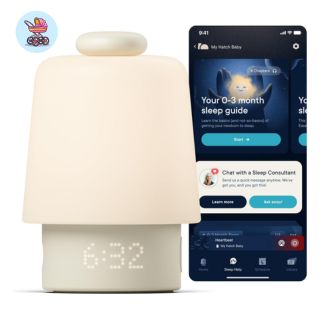
The Hatch Rest has become a sleep-deprived parent’s best friend. It’s one of those registry items that parents don’t always think to add themselves — which makes it a genuinely memorable gift. App-controlled, adjustable, and used nightly for years. Great for anyone in the $60–$80 range.
⭐ Best For: Friends, extended family, anyone who wants a practical standout gift
KEY SPECS:
- Product type: Sound machine + night light combo
- Connectivity: Wi-Fi / app-controlled
- Price range: $60–$80
- Available on Amazon: Yes
PROS: ✅ Used from newborn through toddler years ✅ App-controlled brightness and sound ✅ Highly rated by US parents
CONS: ❌ Requires Wi-Fi — setup adds a step ❌ App subscription needed for some features
Where to Buy Baby Shower Gifts — Best Price Today
Amazon, Target, and Buy Buy Baby all let you search registries directly and compare prices. Amazon’s universal registry search often surfaces the best deals, especially on items originally listed at other retailers.
Always purchase from authorized retailers only.
Frequently Asked Questions
Is $50 a good baby shower gift?
Yes. For a friend or extended family member, $50 is a solid and appreciated amount. It buys a quality registry item or a thoughtful bundle without overspending.
How much should a grandparent spend on a baby shower gift?
Most grandparents spend $100–$300 or more. The expectation isn’t to spend the most — it’s to spend where it counts. Big-ticket practical items like a stroller or crib are common choices.
How much should you spend on a coworker’s baby shower gift?
$20–$40 is the standard range for a coworker. Contributing $15–$20 to a group gift is also completely acceptable and often preferred.
Do you have to bring a gift if you don’t attend a baby shower?
For close friends and family, yes — a gift is still expected even if you can’t attend. For coworkers or casual acquaintances, a card is usually enough. Drop one spending tier if you’re not going.
Is it OK to give a gift card at a baby shower?
Absolutely. Gift cards to Amazon, Target, or Buy Buy Baby are practical, flexible, and widely appreciated. Dress it up with a nice card or small treat to make it feel personal.
Should you spend less on a second baby shower?
Yes. Second baby showers (sprinkles) are typically smaller events with lower gift expectations. Drop one tier from what you’d normally spend. Consumables like diapers and wipes are ideal.
Is it rude to go off-registry for a baby shower gift?
For close friends, off-registry gifts are fine if you know their taste. For acquaintances or coworkers, stick to the registry — it avoids duplicates and ensures the gift gets used.
How much should you spend on a baby shower gift for your best friend?
$75–$150 is the typical range for a best friend. A registry item she’s excited about — or a contribution toward something big — shows you’re paying attention.
The Bottom Line
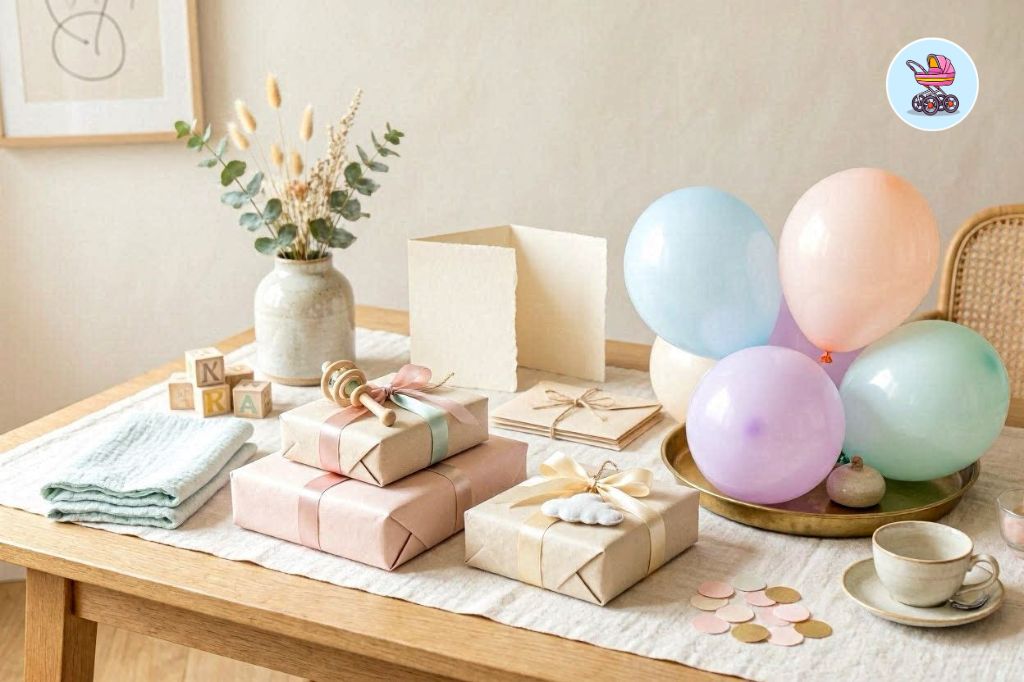
Figuring out how much to spend on a baby shower gift comes down to three things: your relationship, your budget, and the type of shower. For most people, $30–$100 covers the full range comfortably. Go toward the higher end for close friends and family; stay lower for coworkers and acquaintances; and never spend beyond what feels comfortable.
The parents will remember that you showed up — not the price tag on the gift.
Shopping for the full event? These coed baby shower games everyone will love are a great next step for anyone planning the party.
Written by Sarah Mitchell — Founder, careforcuties.com. Sarah is a US mom who has planned (and attended) more baby showers than she can count. She started Care for Cuties in 2025 to help parents and planners find real, practical advice without the fluff.